
Thank you for Subscribing to Energy Business Review Weekly Brief

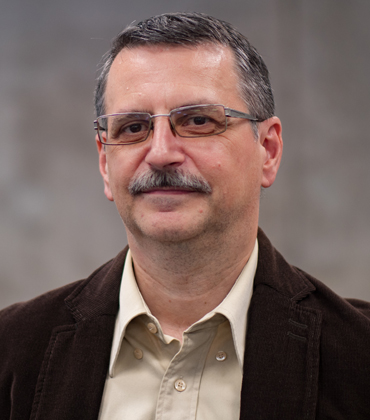 Dragomir Konstantinov, Founder and Managing Partner
 The pursuit of more efficient engineering has led to major advances in propulsion, renewable energy and industrial systems. Yet one important question often gets overlooked. What if the next breakthrough is not about generating more energy, but about making better use of the energy we already have?
The Oroboro Jet ™ propulsion technology makes better use of non-rectilinear jet streams to improve propulsion performance. By redirecting fluid flows in more effective ways, the technology helps transport systems achieve greater efficiency, improve overall energy utilisation and reduce unnecessary losses without simply adding more power, allowing operators to complete more work with the same energy input.
Constant Dynamic Systems develops advanced propulsion technologies and complementary energy solutions that help the transport, renewable energy and industrial sectors accomplish more work with the same amount of energy. Drawing on the different behaviour of non-rectilinear fluid streams, it applies a single engineering philosophy to extract more useful work from existing energy inputs, reducing the need for larger systems or higher power consumption.
Its portfolio includes patented propulsion systems, innovative wind energy solutions and advanced piezoelectric energy harvesting technologies. Protected by patents across the European Union and the United States, with continuing international IP expansion underway, these solutions serve different markets but share the same purpose of helping customers accomplish more work while reducing waste. Whether serving transport operators or renewable energy developers, Constant Dynamic Systems ultimately measures success by a simple outcome, helping customers complete more jobs with the same—or even lower—operating expense.
“We develop propulsion systems focused on the utilisation of non-rectilinear jet streams. In this way, we propose a better technology for propulsion. Our potential customers can have more of their jobs done for the same or even lower expenses,” says Dragomir Konstantinov, founder and managing partner.
Konstantinov is joined on the management team by Simeon Gorov, head of the marketing and analysis division, and Eng. Velichko Tepavicharov, foreman of the technology development division, whose expertise supports the company's commercial strategy and ongoing engineering innovation.
Challenging Conventional Thinking to Unlock Better Energy Utilisation
Many engineering breakthroughs begin with a simple question. What if there is a better way?
That mindset has shaped Constant Dynamic Systems from the beginning. While classical mechanics remains fundamental, it believes fluid streams behave differently from solid bodies, creating engineering opportunities that conventional propulsion systems do not fully exploit. Through non-rectilinear jet streams, rotating nozzles and action-counteraction effects, the company seeks to improve propulsion without simply adding more power.
Its research centres on non-rectilinear jet streams, where airflow and fluid flow can be redirected to improve propulsion and energy utilisation. Constant Dynamic Systems’ work focuses on how curved and continuously flowing jet streams can improve overall system performance, challenging conventional approaches that treat fluids as solid objects in motion.
The idea emerged after Konstantinov observed technologies such as vertical take-off aircraft, whose rotating nozzles redirect jet streams for vertical lift, and water jet packs. Rather than viewing them as isolated engineering achievements, he saw evidence that fluid propulsion systems behave differently from conventional solid-body assumptions. That observation led him to ask whether these characteristics could be developed further, ultimately launching Constant Dynamic Systems’ research into non-rectilinear jet streams and more efficient propulsion systems.
One Engineering Philosophy, Multiple Applications
Constant Dynamic Systems' engineering approach is reflected in three complementary applications of the same engineering philosophy, addressing different industry challenges. Each technology demonstrates the company's approach to extracting more useful work from existing energy inputs, illustrating how a single engineering philosophy can address different industry challenges.
We develop propulsion systems focused on the utilisation of non-rectilinear jet streams. In this way, we propose a better technology for propulsion. Our potential customers can have more of their jobs done for the same or even lower expenses.
One of its earliest commercial applications is in agricultural drones, where Constant Dynamic Systems is developing specialised designs for operators looking to improve productivity while reducing operating costs.
Agricultural drones became its first pilot application because their growing adoption among farmers makes them a practical environment for demonstrating the technology. Konstantinov believes the propulsion approach can help operators complete more work with lower expenses and simpler logistics before expanding into larger transport platforms.
Constant Dynamic Systems’ LITEMIGHT TOWER ™ technology applies the same engineering philosophy to renewable energy. Traditional vertical-axis wind turbines often lose efficiency because one side of the rotating structure captures useful wind while the opposite side creates unwanted resistance, limiting their wider adoption in large-scale wind farms. Constant Dynamic Systems addresses this challenge with flexible wind catchers, similar to sails or parachutes, that maximise wind capture in one direction while reducing reverse drag and extracting more useful energy from the same wind resource.
“We propose a solution that removes the negative counteraction, thereby increasing overall wind turbine efficiency and the amount of energy generated,” explains Konstantinov.
 The design also improves manufacturing, transport, installation and long-term operation. Many components can be produced without relying on traditional foundries, using manufacturing processes similar to those employed by sewing workshops. Because the wind catchers are lightweight, they can be transported using ordinary pickups or even camels in remote terrain. Flexible wind catchers can also be installed in remote areas where conventional wind turbines would be difficult or too expensive to deploy, reducing deployment costs while extending renewable energy access.
Maintenance has also been simplified. Drones can potentially carry out many servicing tasks, eliminating the need for large cranes while helping operators reduce costs, minimise downtime and streamline long-term maintenance.
Together, these advantages reflect Constant Dynamic Systems' broader focus on lifecycle efficiency, considering manufacturing, transportation, installation and long-term operation alongside device performance.
Constant Dynamic Systems extends the same approach through PIEZEROWATT, its advanced piezoelectric energy harvesting technology. Traditional systems rely on individual piezoelectric plates to generate electricity from external pressure. PIEZEROWATT ™ instead uses stacked piezoelectric structures that produce stronger electrical impulses from the same applied force. By using stacked structures rather than individual plates, the technology generates higher energy impulses from the same external pressure, improving the efficiency of energy harvesting.
This opens new possibilities for harvesting energy in pedestrian walkways, transport corridors and other environments where mechanical movement already exists. The technology captures usable electricity from energy that would otherwise be wasted, improving energy utilisation from existing infrastructure. Together with the company's propulsion and wind energy technologies, PIEZEROWATT ™ reflects the same engineering philosophy of maximising useful work from existing energy resources while reducing waste.
Transforming Research into Practical Innovation
Constant Dynamic Systems validates its technologies through continuous prototyping and real-world testing before commercialisation, turning engineering research into practical applications.
 An example came during field testing of the LITEMIGHT TOWER ™ system. Early outdoor prototypes showed that rainwater could collect inside some of the flexible wind catchers, affecting their performance. The engineering team redesigned the geometry of the wind catchers so rainwater naturally drained away while preserving aerodynamic performance. The episode reflects the company's iterative process of prototyping, testing, redesign and refinement.
Constant Dynamic Systems' development process is further supported by repeated prototype development, in situ testing and independent scientific observations conducted in collaboration with the Technical University of Sofia, the Bulgarian Academy of Sciences and the Institute of Robotics. Together, these activities have demonstrated that the technologies are practical engineering solutions, not purely theoretical concepts. This iterative process of prototyping, independent scientific collaboration and real-world testing is central to the company's approach to innovation, ensuring that new engineering concepts are refined and validated before commercial deployment.
Konstantinov further emphasises that turning engineering concepts into commercial technologies depends on strong collaboration with research institutions, reliable prototyping partners and a supportive local innovation ecosystem.
Constant Dynamic Systems is commercialising its technologies through carefully selected pilot applications where measurable performance gains can be demonstrated, with agricultural drones serving as the initial platform. Alongside these efforts, it continues refining technologies for transportation, renewable energy and distributed power systems.
Engineering a More Efficient Future
As energy systems become more decentralised, organisations are placing greater emphasis on resilience, flexibility and local energy security. Konstantinov notes that interest in decentralised energy had already been growing, but recent political and military disruptions exposed the vulnerability of highly centralised infrastructure, reinforcing the need for more adaptable energy systems.
-
We would like to demonstrate that a sustainable economy and sustainable businesses do not necessarily require significant so-called green expenses, but instead, these aspects of the sustainable business may be turned into some green revenues.
Constant Dynamic Systems’ vision extends beyond engineering performance. Drawing on Blue Economy and Blue Ocean principles, Konstantinov believes sustainable business should generate “green revenues” moving beyond simply incurring “green expenses,” helping organisations improve productivity, lower operating costs and extract greater value from existing energy resources while reducing resource consumption.
“We would like to demonstrate that a sustainable economy and sustainable businesses do not necessarily require significant so-called green expenses, but instead, these aspects of the sustainable business may be turned into some green revenues,” explains Konstantinov.
Across its propulsion, wind energy and piezoelectric technologies, the company focuses on helping operators, renewable developers and industrial asset owners achieve greater performance while reducing resource consumption and improving energy utilisation. Each technology reflects the same engineering philosophy of delivering more useful work from the same available energy.
Through scientific research, practical validation and commercial focus, Constant Dynamic Systems has established a distinctive position in the evolving energy landscape, advancing from research and pilot applications to broader commercial opportunities.
This progression, from challenging conventional assumptions to developing validated engineering solutions that improve energy utilisation and lifecycle efficiency, reflects the qualities recognised by the Top Reactive Power Utilization Solutions 2026 award.
Choosing Reactive Power Utilisation for Decentralised Energy Demands
Remote energy projects often fail at the point where mechanical force first becomes usable power. A site may have wind, pressure variation, moving fluid or repeated vibration, yet still lose value through drag, irregular impulses, heavy equipment handling and grid-side correction costs that appear after the device is already installed. For executives reviewing reactive power utilisation, the purchase decision is less about adding another compensation layer and more about whether the system reduces instability before it travels into electrical infrastructure.
A serious review begins at the energy-capture stage. Designs that rely on downstream correction alone can leave buyers paying twice: once for generation hardware and again for controls that manage avoidable fluctuations. Better approaches use the physical behaviour of moving air, water, pressure loads or repeated vibration to limit wasted counteraction and produce more useful input before conversion. That distinction matters in renewable assets where output quality, site access, service burden and financing risk can decide whether a project remains financially sensible beyond commissioning.
Wind applications make the trade-off visible. Conventional vertical-axis arrangements can suffer when one side of the rotor catches useful force while the returning side creates drag. Buyers should look for designs that address that mechanical penalty directly, not only through electronic smoothing afterwards. The same logic applies to pressure-based generation. Piezoelectric harvesting can be attractive in roads or walkways, but its economics depend on whether a brief impulse can be multiplied into meaningful electricity without making the collection hardware impractical.
Procurement teams also need a disciplined view of readiness. Unconventional renewable hardware should be tested against the conditions that normally expose weak design choices: changing weather, interrupted access, maintenance staffing and uneven demand. A promising device is easier to finance when the buyer can understand where force enters the system, how losses are controlled, what service actions will be required and how much field intervention the asset can tolerate after installation. Claims about higher generation must be tied to a visible mechanism.
"The purchase decision is less about adding another compensation layer and more about whether the system reduces instability before it travels into electrical infrastructure."
Site economics deserve equal scrutiny. Large renewable devices can carry hidden costs in fabrication, transport, assembly and repair. A design that performs well on paper but needs heavy cranes, specialised roads, narrow delivery windows or difficult service access may not fit remote energy users and rural operators. Lighter structures, simpler repair paths, lower handling requirements and tolerance for irregular field conditions become part of the energy case, not secondary conveniences. Buyers should also examine patent coverage and technical maturity, since unconventional reactive systems can be difficult to compare against standard turbine or storage purchases.
Constant Dynamic Systems is a premier choice for buyers studying this field because it focuses on the mechanical source of wasted force rather than treating electrical correction as the main answer. Its LITEMIGHT TOWER™ concept uses flexible wind catchers intended to reduce reverse drag in vertical-axis wind generation, while PieZeroWatt™ applies piezoelectric stacks and force amplification to convert repeated pressure into stronger electric impulses. The company’s work also extends into jet-stream propulsion concepts, but for renewable energy buyers its most relevant fit is decentralised generation where lower equipment weight, field service access, capture-stage efficiency and protected technical design carry direct procurement weight.
...Read more
Reactive Power Utilization Solutions in Europe Info
Q1
What Are Reactive Power Utilization Solutions?
Reactive Power Utilization Solutions help maintain voltage levels and improve the stability, reliability and efficiency of electrical power systems. By controlling reactive power management, they reduce unnecessary energy losses, strengthen voltage stability and improve overall energy efficiency. These technologies are becoming increasingly important as renewable energy sources introduce greater fluctuations into power generation, requiring electrical networks to respond quickly while maintaining consistent performance.
Q2
How Does Constant Dynamic Systems Deliver Reactive Power Utilization Solutions?
Constant Dynamic Systems develops Reactive Power Utilization Solutions through patented technologies focused on reducing electrical losses and improving energy efficiency. Its research includes reactive interaction systems, advanced energy conversion concepts and piezoelectric energy generation, all aimed at improving reactive power management and electrical system performance. By combining scientific research with practical engineering, the company explores new ways to make power infrastructure more reliable and sustainable.
Q3
What Problems Can Reactive Power Utilization Solutions Help Solve?
Reactive Power Utilization Solutions help address voltage instability, transmission losses, poor power quality and reduced equipment performance. Better reactive power management allows electrical systems to respond more effectively to changing demand while maintaining voltage stability across the network. These technologies are especially useful in grids with a growing share of renewable energy, where fluctuating generation can place additional stress on power systems and increase energy losses.
Q4
What Features Should Organizations Look for in Reactive Power Utilization Solutions?
When comparing Reactive Power Utilization Solutions, organizations should look for proven technical design, scalability, compatibility with existing electrical infrastructure and measurable improvements in power quality and energy efficiency. Strong engineering, dependable long-term performance and straightforward implementation also matter because these technologies often become permanent parts of critical electrical networks. Solutions that improve reactive power management without adding unnecessary system complexity are generally better suited for long-term use.
Q5
Why Are Reactive Power Utilization Solutions Becoming More Important?
The shift toward renewable energy, electrification and smart grids has increased demand for Reactive Power Utilization Solutions. Modern electrical networks experience frequent changes in power generation and consumption, making voltage stability and reliable reactive power control essential. Effective Reactive Power Utilization Solutions help utilities and energy providers reduce electrical losses, maintain dependable grid performance and support cleaner methods of power generation without compromising system reliability.
Q6
How Does Constant Dynamic Systems Support the Future of Reactive Power Utilization Solutions?
Constant Dynamic Systems continues to expand research into Reactive Power Utilization Solutions by developing proprietary technologies that improve energy efficiency and support renewable energy applications. Its work on reactive interaction systems, advanced energy conversion and new power-generation methods reflects a long-term commitment to improving electrical infrastructure. Through continued engineering research and practical applications, the company contributes to more resilient power networks and more effective reactive power management.
Company
Constant Dynamic Systems
Management
Dragomir Konstantinov, Founder and Managing Partner
Description
Constant Dynamic Systems is rethinking energy utilization through innovative propulsion, wind energy and piezoelectric technologies. By maximizing performance from existing energy inputs while reducing lifecycle costs and resource consumption, it helps industries achieve greater efficiency through practical, research-driven engineering innovation.
