
Thank you for Subscribing to Energy Business Review Weekly Brief
OKWIND
Storing the Value of Renewable Energy
Renewable electricity has transformed how organisations think about energy management. Producing clean power represents only one part of the equation, as solar generation and electricity demand rarely follow the same pattern. Storing available energy for later use has therefore become essential to improving efficiency, resilience and long-term energy independence. OKWIND has positioned itself at the centre of that transition. Through renewable energy generation, intelligent storage and advanced energy management technologies, the company helps organisations optimise self-consumption, improve energy independence and strengthen long-term operational resilience. Its integrated approach enables customers across Europe to make renewable energy work more efficiently rather than simply producing more of it. Engineering Energy Autonomy OKWIND's approach begins with a simple principle. Renewable electricity should remain under the customer's control for as long as possible. Every technology developed inside contributes towards that objective, creating an environment where locally generated power becomes an active business resource instead of electricity that is consumed immediately or exported whenever production exceeds demand. Energy storage reflects that philosophy. Batteries perform an important role, yet their real value emerges only when generation, consumption and storage respond to one another as parts of the same operating cycle. OKWIND has built its solutions around those relationships, ensuring every component exchanges information continuously before energy is directed towards the activity where it creates the greatest value. Such coordination influences the way every installation is designed. Photovoltaic generation is not planned independently from storage capacity, and battery systems are not introduced as stand-alone additions once production has been established. Every project is developed as a complete renewable ecosystem where equipment, control technologies and operational requirements are considered together from the outset. Manufacturing facilities, farms and commercial sites each follow their own operating rhythm, creating different patterns of production and demand throughout the day. OKWIND adapts system architecture around those realities instead of expecting customers to reshape their activities around renewable generation. Energy requirements continue to evolve as organisations expand renewable capacity over time. Additional storage, generating assets or control functions become natural extensions of the original design because every installation shares the similar architectural foundation. Organisations can therefore increase renewable capacity progressively without creating disconnected technologies that require separate operating practices or independent decision-making.
Wind Energy
nvisionist
AI-Driven Birds and Bats Risk Management for Wind Farms
Eirini Louizou, Business Development Manager
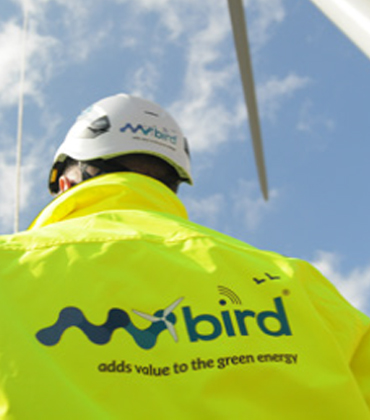
nvisionist operates at the intersection of applied artificial intelligence, computer vision and advanced digital technologies to develop systems that protect both energy systems and the natural world. A global AI leader and a DeepTech company, its solutions are designed to deliver measurable environmental, operational and societal impact. Key among them is nvbird®, an AI-powered, mission-critical, field-proven bird and bat collision prevention system for wind farms that uses computer vision at the edge and autonomous intervention to deliver real-time detection and selective mitigation near turbines. “nvbird® remains dedicated to supporting its clients in ensuring reliable and environmentally responsible wind farm operations, by contributing to the protection of local biodiversity and enabling sustained energy production through the reduction of unnecessary curtailment,” says Eirini Louizou, business development manager..
Clean Energy Public Relations Firm

KAOH Media Enterprises
Powering Progress Through Trust, Strategy, and Connection
Allan Hug, Co-Founder and CGO
This public relations and public affairs firm was built for one reason: to get renewable energy projects approved and built. KAOH Media helps developers cut through opposition, win trust, and secure the political and community support that keeps projects on schedule and on budget. Leveraging KAOH’s vast experience in this market, resistance becomes momentum and delays turn into approvals—so that developers can focus on building infrastructure, not battling headlines or hearings. Clean energy projects are capital-intensive, highly scrutinized, and vulnerable to misinformation. In rural and politically sensitive regions, false narratives can spread faster than facts, stalling projects, raising costs, and eroding investor confidence. Developers know that no matter how strong the technical or financial case may be, a project cannot advance without community and political support. That’s where KAOH steps in. Through hyperlocal outreach, disciplined messaging, and trusted relationships, KAOH builds the political cover and grassroots backing that renewable projects need to withstand scrutiny and secure long-term acceptance. “Public affairs often rely on speed and spectacle. We focus on resonance— how the message connects with the audience,” explains Allan Hug, Co-Founder and CGO. A Four-Phase Approach to De-Risking Development KAOH aligns its strategy with the natural life cycle of renewable energy projects: 1.Pre-Application – Early engagement with landowners, coalition-building, and narrative development rooted in local values. By shaping the story from the start, KAOH reduces uncertainty and paves the way for smoother applications. 2.Approval Stage – Targeted outreach to zoning and planning boards, reinforced by grassroots organizing, media relations, and digital advocacy. KAOH equips decision-makers with the trust and cover they need to say yes. 3. Construction – Clear, consistent updates and rapid responses that demonstrate accountability: “milestones met, promises kept.” This minimizes friction and prevents small issues from spiraling into costly delays.
Electric Submetering Services
Nationwide Energy Partners
A New Utility Management Era
Timothy J Harper, President & CEO and Kit Hagen, Senior Vice President, Growth and Business Development
Nationwide Energy Partners (NEP) is transforming the energy landscape for multifamily communities by turning utilities management into a smarter, more connected experience for property owners and their residents. Its role goes beyond that of a traditional, fee-based submetering provider - it operates as a privatized energy services partner. Property owners gain a customizable, end-to-end solution that integrates utility infrastructure installation, maintenance, and management with unified resident billing. At the heart of NEP’s operations is a business model that converts energy management into an income-generating opportunity for multifamily owners. Legacy utility providers and fee-based submetering companies often operate within rigid, one-size-fits-all frameworks that leave property owners footing the bill for infrastructure installation and maintenance. Fee-based submetering providers charge residents additional fees for their services. NEP challenges this outdated model with an adaptable framework built around speed, flexibility, and accuracy, designed to meet the operational and financial needs of each community. Serving both new and existing communities, NEP’s approach brings measurable savings while introducing new revenue streams for property owners. The company enables the establishment of a commercial account for each property and installs infrastructure behind the utility provider’s master meter - often at little to no cost for owners. “We go beyond providing access to energy. NEP is reshaping ownership, efficiency and control for property owners who have long been excluded from the value chain,” says Kit Hagen, Senior Vice President of Growth and Business Development.

Energy Marketing

Policies and technologies driving the clean energy transition in the U.S.
Brendan Andrews, VP of Sales, Energy, and Renewables, Bureau Veritas North America [Stock: EPA: BVI]
Renewable Energy

Options Available for Rising Energy Costs.
LatifFaiyaz, Head of Energy Trading, Northern Gas and Power
Power Plant

Scaling up in the Energy Sector: Challenges and Opportunities Ahead
Mark Schaefer, Senior Program Manager Digitalization, Siemens Energy
Energy Consulting

Driving Sustainable Energy Solutions For A Greener Future
Jason Colbenson, Senior Quality Assurance Specialist, Dairyland Power Cooperative
Energy Consulting

Leading the Low-Carbon Transition in Energy
Marcos Matijasevich, Head of Low Carbon Transition, Essar Oil (UK) Limited [NSE: ESRO]

IN MY OPINION
Energy Consulting
How The Energy Transition is Reshaping Engineering
Christian Lopez, Senior Director Engineering: Performance, Commissioning & SCADA, The AES Corporation [NYSE: AES]

LAST WORD
Energy Sources
Local Leadership Powering Long Term Impact
Koen Mertens, Country Manager for the Netherlands, Enphase Energy
IN FOCUS

Europe's Wind Energy Evolution: Harnessing the Power of Advanced Turbine Technologies
Modern wind turbines in Europe are boosting energy output through advanced designs, digital optimisation, and improved grid integration.

Green Hydrogen Solutions: Paving the Way for Europe's Sustainable Future
Green hydrogen solutions support the clean energy transition, enhance energy security and drive clean technology innovation.
EDITORIAL
Advancing Europe’s Renewable Energy Future
Across Europe, organisations are placing greater emphasis on how renewable energy performs after it is generated. Intelligent storage, advanced control systems and AI-powered optimisation are helping businesses improve efficiency, strengthen resilience and maximise the value of every renewable asset. In this edition of Energy Business Review Europe, we highlight the companies and leaders driving that transformation.
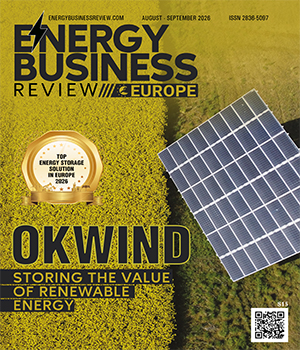
Our cover story features OKWIND, recognised as the Top Energy Storage Solution in Europe 2026. The company has redefined energy storage by treating generation, storage and energy management as a connected ecosystem rather than independent technologies. Through intelligent control systems that continuously balance production, consumption and battery capacity, OKWIND helps agricultural, industrial and commercial organisations maximise self-consumption, strengthen energy autonomy and improve the long-term value of renewable investments.
Also recognised in this edition is nvisionist as the Top Wind Turbine Solution in Europe 2026. Its AI-powered nvbird® platform enables wind farm operators to protect biodiversity while maintaining operational performance through real-time bird and bat detection, selective turbine intervention and continuous monitoring. By combining edge computing, computer vision and autonomous decision-making, nvisionist helps renewable energy projects balance environmental responsibility with reliable energy production.
This issue also features perspectives from leaders navigating the next phase of the energy transition. Christian López, Director of High Voltage, SCADA & Resource Integration at The AES, explains how engineering innovation, standardisation and cross-functional collaboration are helping organisations adapt to increasingly complex renewable power systems. Koen Mertens, Country Manager for the Netherlands at Enphase Energy, discusses why strong local partnerships, disciplined execution and long-term investment in system resilience are essential to delivering sustainable growth in evolving energy markets.
Together, these stories show that the future of renewable energy depends not only on generating more clean power, but on managing it more intelligently. We invite our readers to explore these perspectives and discover how thoughtful innovation continues to strengthen Europe’s energy transition.
