
Thank you for Subscribing to Energy Business Review Weekly Brief
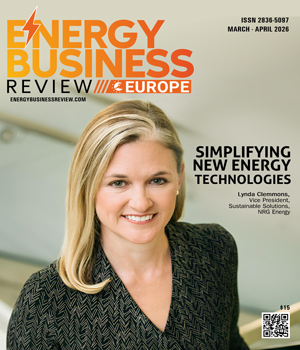
What do you think should be the central theme of the profile? What is it that you’d like to convey The energy industry is going through radical transformation and technology is evolving, allowing for smarter, more controllable demand at the hands of the consumer. NRG, as a customer- focused organization, helps provide deeper insights and ultimately a truly customizable energy solution. As an example, through our own current digital transformation, we leverage customer usage insights to develop and refine our offerings even further, allowing us to provide recommendations proactively rather than waiting for the customer to come to us. We understand with the onset of technology comes data, with much information out there to decipher—that can be overwhelming at times. This is where we enter. So as new energy technologies grow even more complex, we will work to simplify things and make ourselves useful to our customers. In light of your experience what are the technological trends and challenges you’ve witnessed in the smart energy space? Consumers will not accept an average customer experience, especially for something as important as electricity. As a forward-thinking energy company, we want to bring exemplary interaction to customers at every stage in our lifecycle. Our customers expect simplicity, easy-to-understand experiences and superior service. And as part of our digital transformation, we developed customized digital toolsets that give customers actionable insights about their energy usage and behaviors, along with making previously complicated account transactions simple. We want our consumers to know they’re getting good value and prove we’re a partner for the long haul.
Sustainable Biomethane Fuel Supplier
CNG Fuels is accelerating the shift to low-carbon freight by building and operating the UK’s largest and only nationwide network of public-access, high-capacity biomethane refuelling stations. Purpose-built for heavy goods vehicles (HGV), the heaviest carbon emitters on British roads, this infrastructure offers fleet operators with a proven, immediate route to decarbonisation. The engine behind its impact runs on 100 percent renewable biomethane, produced from genuine waste, including food scraps, animal slurry, sewage and grass clippings, through anaerobic digestion. Chemically identical to fossil methane, the fuel can be injected into the UK’s existing gas grid and distributed through established infrastructure. When used in natural gas vehicles, it requires no engine modification or driver retraining, offering a drop-in, low-carbon alternative that’s easy to adopt—available today. Vehicles running on CNG Fuels’ biomethane cut emissions by more than 85 percent and reduce fuel costs by up to 30 percent. They deliver the same reliability and performance as diesel, without the trade-offs of other low-carbon options, such as long queues, complex refuelling or retraining needs. Refuelling takes just 8 to 10 minutes and supports ranges of up to 500 miles. Stations are open 24/7, unmanned and equipped with up to 14 high-throughput dispensers tailored to real-world logistics demands. “This is a business where uptime equals credibility,” says Baden Gowrie-Smith, CFO. “We built our name on never letting a truck turn away.” With over 2,000 trucks refuelling daily at 16 live stations, and three more opening soon, CNG Fuels has laid the foundation for mass-market adoption. Its current capacity exceeds 10,000 trucks per day, and with more than 120 stations in development, the company is scaling rapidly to meet growing demand. Backed by institutional investor Foresight Group, it plans to launch at least three new stations annually, strategically positioned along key logistics corridors. Low-Carbon Freight That Pays Off Biomethane’s operational simplicity is matched by its financial clarity. With a typical five-year vehicle lifecycle, many fleets are now onboarding 40 to 50 trucks at a time, finding that switching to biomethane offers a strong return on investment while insulating them from volatile diesel markets and tightening emissions targets.
Sustainable Energy Management Consulting Firm

Breadth of expertise and clarity of purpose, often difficult to combine, come together in Studio Santi an Italian engineering and energy consultancy specialising in sustainable systems and innovation driven solutions. Much like the Renaissance workshops that shaped Italy’s legacy of innovation, Studio Santi thrives on mentorship and shared mastery. Knowledge flows directly from its founding engineers to a new generation of specialists, creating a culture where ideas are tested, refined and brought to life through collaboration. Today, that has evolved into a modern ecosystem of 30 engineers across civil, electrical, mechanical, environmental and digital disciplines. Bound by academic rigour and scientific curiosity, together, they tackle the current sustainability challenges. Locally, this means cutting energy use in data centres and improving airport efficiency. Globally, it means expanding renewable capacity in communities across Africa and beyond. In its 25 years, Studio Santi has supported the development of about 1.2 GW of renewable energy plants and 700 MW/5 GWh of energy storage systems. Over the past two years, its focus in central and southern Italy has included more than 700 MW of photovoltaic and agrivoltaic plants, as well as 400 MW/2 GWh of battery storage projects. But figures alone cannot capture the spirit of the enterprise. What distinguishes Studio Santi is its stance. Projects are treated as personal undertakings and each outcome is a shared achievement. “Working with Studio Santi means experiencing professionalism paired with passion and expertise enriched by humanity. That is why partnerships formed decades ago still thrive today. Trusted to shape low carbon ecosystems, we envision a future of abundance through the union of scientific knowledge and creative application, much like the Renaissance’s flowering of innovation and human potential,” says Professor Federico Santi, CEO and managing director. The Complete Circuit When a potential client meets with Studio Santi, the first question they are asked is not what they need but what they believe in. The firm grounds its mission in what Pope Francis described in Laudato Si’ as integral ecology; the conviction that sustainable development must unite environmental, social, technological and economic progress. This vision is brought to life through rigorous analysis and examination. Clients often arrive with ambitious goals that must be tested against constraints. Studio Santi conducts feasibility studies, energy audits, grid analyses and environmental assessments, each incorporating cost projections and risk analysis to identify obstacles before they derail progress. “We look at projects from a technical, regulatory and financial angle. Only then can a decision be sound. This multidisciplinary view removes uncertainty and allows clients to commit confidently,” explains Santi. Once feasibility is established, design takes shape. Projects are developed from preliminary concepts through detailed engineering in civil, mechanical, electrical and digital systems. Advanced tools, from drone-based site surveys to building information modelling, are used to create digital twins. These virtual models guide procurement, plan construction sequences and lay the groundwork for operations and maintenance. Client teams are trained to use the platforms, ensuring operational independence long after handover. During construction, Studio Santi acts as the owner’s engineer (OE), representing client interests as its own. It supervises construction quality, manages safety protocols and ensures compliance with national regulations and international standards. “We integrate specialist studies that often determine viability. These include geotechnical surveys for foundations, archaeological assessments near heritage sites and agronomy where solar farms meet farmland,” says Francesco Castellani, technical director. “Nothing is peripheral. Every element affects the whole.” This continuity enables clients to move from concept to completion without disruption. After commissioning, Studio Santi’s role shifts to performance optimisation. The digital twins created during design become operational dashboards, displaying real-time sensor data that show asset performance, flag anomalies and identify opportunities for improvement. These platforms support predictive maintenance schedules, adaptive control systems and benchmarking. The result is higher yields, reduced downtime and extended equipment life. Specialised Expertise in Solar and Beyond Specific sectors demand expertise that is not widely available. In solar glare assessment, Studio Santi is a world leader. Using the Solar Glare Hazard Analysis Tool (SGHAT) developed by Sandia National Laboratories, it conducts glint-and-glare studies that consistently secure regulatory approval. This rare capability enables projects to reconcile solar expansion with operational safety. One example is Aeroporti di Roma. For over a decade, Studio Santi has guided the airport’s energy masterplan and glare assessments for more than 60 MWp of photovoltaic systems along the runways. In January 2025, Fiumicino inaugurated Europe’s largest airport solar farm, a 22 MWp plant with battery storage systems built from reconditioned EV batteries. These systems are expected to eliminate 25,000 tonnes of CO₂ emissions annually.
Renewable Energy Assets Service
In renewable energy, the only constant is movement. Technology changes. Rules shift. Markets reset before assets reach maturity. Loyalty in this environment is won by partners who provide stability across the whole life of an asset. Enlight Energy Services has positioned itself around that premise. The company manages end-to-end photovoltaic (PV) investments, from development through construction (in a JV with an EPC company) and long-horizon asset management. This creates a single line of accountability and a cohesive view of risk, performance, and compliance from day one to year twenty. The structure works because the expertise is deep. Administrative, finance, accounting, technical operations, and ESG teams convert dense regulations into operating assets. The company’s streamlined organisational structure promotes a rapid and efficient decision-making process, which is crucial in markets where timing determines success. In Italy, for instance, Enlight has supported investors entering emerging market segments through workshops and data-driven insights that shaped their strategies. Technical proficiency alone, however, does not explain the company’s enduring partnerships. Enlight operates on a people-centric philosophy, viewing asset management as collaboration rather than transaction. Open communication, long-term trust-based relationships, and internal focus on employee engagement and training (on both hard and soft skills) ensure continuity and preserve “historical” knowledge of client assets. “We consistently resonate with clients, reinforcing our loyalty to our services in the renewable energy space by focusing on integrated lifecycle management, multidisciplinary expertise, efficient decision-making, and a strong commitment to client relationships,” says Maria Sabella, CEO.
CXO INSIGHTS

A Customer-Centric Approach To Grid-Connected Distributed Energy Resources
Rodger Smith, SVP & GM, Oracle Utilities [NYSE: ORCL]

Energy Management: A Perspective from Sports and Entertainment
John Marler, Vice President, Energy and Environment, AEG

Digital Transformation: Unite & Conquer
David Harmon, Director of Businees Service & Data Analytics, Oil States International, Inc.

Leading the Low-Carbon Transition in Energy
Marcos Matijasevich, Head of Low Carbon Transition, Essar Oil (UK) Limited [NSE: ESRO]

Ushering a New Era of Renewable Energy
Tryggvi por Herbertsson, Global Head of Hydrogen Strategy and Partnership, QAIR Group


IN FOCUS
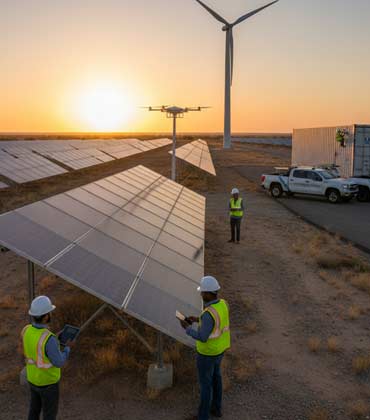
Europe's Energy Transition: From Siloed Generation to Hybrid Asset Management
The European energy sector is shifting to hybrid asset management, integrating renewables and fossil fuels to enhance flexibility and optimise operational efficiency in energy production.

Advantages of Industrial Equipment Relocation
Industrial equipment relocation services reduce downtime, improve operational planning, and increase cost efficiency.
EDITORIAL
Powering Europe’s Energy Shift
Europe’s energy landscape is being redefined by decarbonisation mandates, geopolitical uncertainty and rising expectations from customers and regulators. Security of supply, affordability and sustainability must now be addressed simultaneously rather than sequentially. This edition of Energy Business Review Europe reflects that tension, exploring how utilities and energy leaders are balancing infrastructure modernisation with digital transformation to create a more stable and intelligent system.
As generation becomes increasingly distributed and customer participation grows, complexity is expanding across the grid. Data from smart assets, distributed energy resources and evolving market mechanisms can either overwhelm operations or unlock performance gains. The differentiator lies in integration. Organisations that align generation, consumption insights and commercial structures under a unified operational framework are reducing friction while strengthening reliability. Simplifying energy engagement for commercial and industrial customers is emerging as a strategic imperative, ensuring that advanced technologies translate into practical value.
Across the broader discussion in this issue, several structural themes stand out. Customer centric grid models are reshaping distribution planning and lifecycle management. Microgrids, storage and flexible assets are enhancing resilience against volatility and extreme events. In parallel, industrial decarbonisation efforts are advancing through hydrogen development, carbon capture initiatives and coordinated policy advocacy. Energy management is evolving into a board level priority, linking cost control, environmental performance and risk mitigation. Digital governance and unified data strategies are enabling organisations to move beyond siloed functions towards enterprise wide visibility.
The convergence of analytics, cloud platforms and modern payment ecosystems is further transforming customer interaction and operational forecasting. Europe’s transition will depend not only on expanding renewable capacity but on disciplined execution, regulatory clarity and cross sector collaboration. We invite readers to examine the insights shared in this edition and assess how integration, operational rigour and forward looking leadership will define the next chapter of Europe’s energy evolution.
