
Thank you for Subscribing to Energy Business Review Weekly Brief
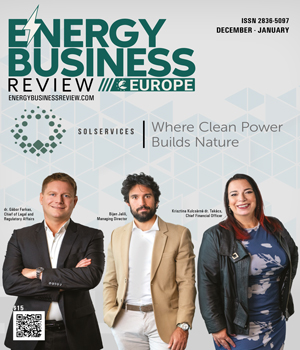
SolServices
Where Clean Power Builds Nature
Hungary today stands at the forefront of Europe’s solar transformation. Strong irradiation, favorable landscapes, and an ambitious national energy strategy have made the country one of the continent’s fastest-growing clean-electricity producers. Behind this momentum is SolServices Kft., a developer whose work demonstrates that the next generation of solar parks can generate far more than power. They can restore landscapes, support biodiversity, and strengthen communities — becoming long-term assets in every sense. SolServices’ portfolio reflects both scale and intention: over 1000 MW of solar capacity developed, 206 MWp in operation, 88 MWp under construction, and similar quantity progressing through the development pipeline, accompanied by emerging wind and battery-storage projects. Yet the company’s defining contribution lies not only in megawatts delivered, but in the model it has established for nature-inclusive solar development — a model increasingly relevant as Europe reshapes its environmental and energy policies. At Lumen Park Szolnok, a 138-megawatt flagship project built on land previously shaped by intensive agriculture, this philosophy is visible in practice. The site generates significant clean power for the national grid while also demonstrating measurable improvements in vegetation cover, plant diversity, and habitat structure. These positive ecological trends arise from a development process that integrates ecological understanding from the earliest concept through long-term operation. Grounding Solar in Ecological Reality SolServices bases its work on a simple insight: land is not an empty surface for infrastructure — it is a living system that responds to how it is treated. To give structure to this perspective, the company created the Next Generation Solar Park Guide, Hungary’s first integrated ecological planning framework for utility-scale solar. Since its release, the guide has been downloaded by specialists across Europe and overseas, reflecting widespread interest in a more land-responsive approach to renewable energy.
In renewable energy, the only constant is movement. Technology changes. Rules shift. Markets reset before assets reach maturity. Loyalty in this environment is won by partners who provide stability across the whole life of an asset. Enlight Energy Services has positioned itself around that premise. The company manages end-to-end photovoltaic (PV) investments, from development through construction (in a JV with an EPC company) and long-horizon asset management. This creates a single line of accountability and a cohesive view of risk, performance, and compliance from day one to year twenty. The structure works because the expertise is deep. Administrative, finance, accounting, technical operations, and ESG teams convert dense regulations into operating assets. The company’s streamlined organisational structure promotes a rapid and efficient decision-making process, which is crucial in markets where timing determines success. In Italy, for instance, Enlight has supported investors entering emerging market segments through workshops and data-driven insights that shaped their strategies. Technical proficiency alone, however, does not explain the company’s enduring partnerships. Enlight operates on a people-centric philosophy, viewing asset management as collaboration rather than transaction. Open communication, long-term trust-based relationships, and internal focus on employee engagement and training (on both hard and soft skills) ensure continuity and preserve “historical” knowledge of client assets. “We consistently resonate with clients, reinforcing our loyalty to our services in the renewable energy space by focusing on integrated lifecycle management, multidisciplinary expertise, efficient decision-making, and a strong commitment to client relationships,” says Maria Sabella, CEO..
Refurbish Storage Facilities Service
Paresa
Engineering the Future of Energy Storage
Dante Ravaioli, Chairman of the Board, Raffaele Cedioli, General Manager, Enrico Sozzi, Commercial Director and Roberto Negroni, Business Development Manager
A transformative force in the energy sector, Paresa combines decades of expertise with forward-thinking solutions that push the boundaries of energy storage and infrastructure. Its comprehensive, end-to-end services, from design and engineering to construction and refurbishment, are tailored to meet evolving client needs. Its expertise ensures every system is built for long-term performance. Paresa products address various storage and energy infrastructure requirements. It includes turnkey storage and terminal solutions for crude oil, hydrocarbons and chemicals built to the robust API 650 standard and specialized double-walled and spherical tanks for liquified gases. Paresa began its journey in maintenance and refurbishment, establishing a solid foundation that now informs its innovative designs for new storage plants. Its deep-rooted expertise in tank maintenance, inspection and design enables it to optimize every detail of new storage solutions, ensuring long-term operability and tailored precision for each client’s needs. Each business line supports both new installations and maintenance and refurbishment of existing infrastructure, ensuring flexibility and comprehensive service across all project stages. “As we continue to expand our capabilities in new construction, our deep-rooted experience in maintenance remains a critical factor in ensuring the longevity and efficiency of every system we design,” says Raffaele Cedioli, general manager.
Wind Energy

The floating offshore Wind industry is Advancing with Confidence
Jonathan Boutrot, Global Market Leader - Marine Renewable Energies, Bureau Veritas Group
Power Generation and Transmission
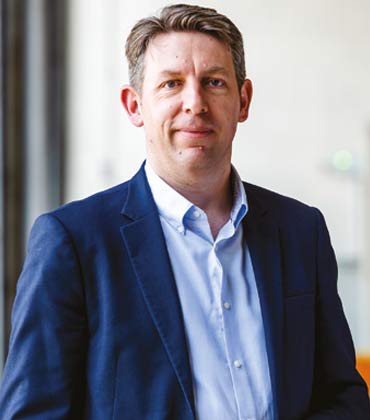
Resolving Sustainability Challenges in UK Data Centres
Antony White, Client Delivery Manager - Central Delivery Team, UK Power Networks Services
Power Generation and Transmission

Upskilling the Workforce for Safer Offshore Operations
Matthieu Jaunatre, Head of Project Governance & Controls, Ørsted [CPH: ORSTED]
Solar Photovoltaic
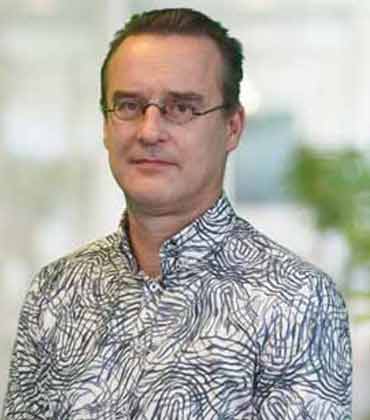
Innovative Waste Management Initiatives: From Cost Reductions to Circular Solutions and Emerging Challenges
Frank Langers, Waste Manager Hazardous Waste, Renewi
Solar Photovoltaic

Ushering a New Era of Renewable Energy
Tryggvi por Herbertsson, Global Head of Hydrogen Strategy and Partnership, QAIR Group
Solar Photovoltaic
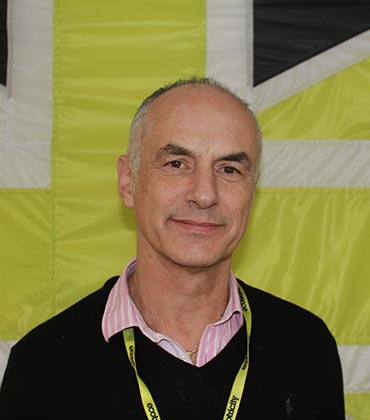
Building VPPs: From Reactive Services to Strategic Foresight
Mark Meyrick, General Manager, Ecotricity Smart Grid Limited
Solar Photovoltaic
Delphy Underground Storage System: The Right Fit for Green Hydrogen Market Needs
Vincent Designolle, Director of Delphy Hydrogen Storage, Vallourec
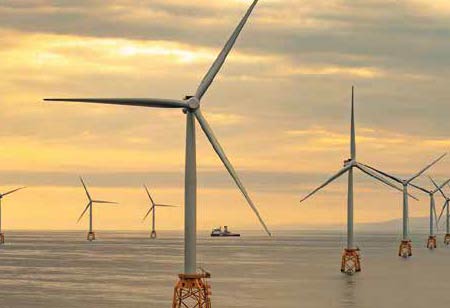
IN MY OPINION
Energy Transition
The Real Work of Energy Transition
Christos Kolliatsas, Technical Director, Clean Energy EMEA, Wood

LAST WORD
Solar Photovoltaic
Where Innovation Meets Reliability in the Race to Decarbonize
Padriac Fowler, Distributed Energy Resources Product Manager, Puget Sound Energy
IN FOCUS
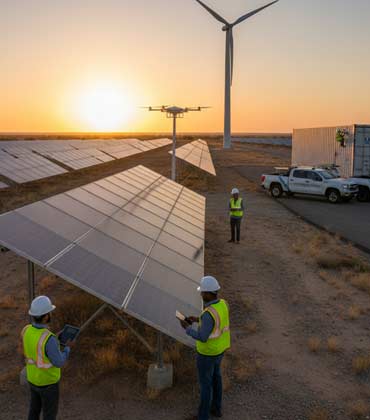
Europe's Energy Transition: From Siloed Generation to Hybrid Asset Management
The European energy sector is shifting to hybrid asset management, integrating renewables and fossil fuels to enhance flexibility and optimise operational efficiency in energy production.
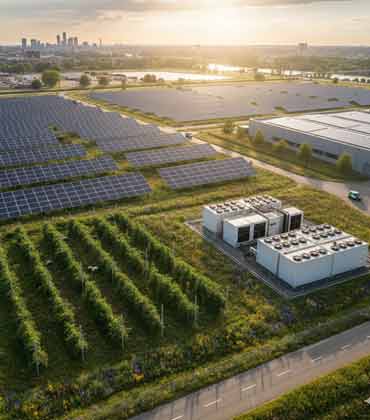
Engineering Solar Parks for Energy and Ecosystem Resilience in Europe
Europe's shift to solar energy emphasises biodiversity-friendly practices, integrating energy generation with ecosystem restoration to enhance land use, agricultural productivity, and community acceptance.
EDITORIAL
Energising the Next Wave of Clean Power
Renewable energy in Europe has moved well beyond its formative stage and is now a dynamic, data-driven system. Wind farms, solar parks and battery clusters are increasingly managed through digital twins, replaying daily performance like athletes reviewing match footage. Predictive analytics flag component fatigue before it disrupts output, while AI-driven grid orchestration aligns generation with demand curves and market signals.
Intelligence is the backbone of this shift. Assets operate on continuous sensing, weather-informed forecasting and sustainability modelling. Service teams have evolved into performance engineers, adjusting and optimising in real time rather than simply repairing faults.
Solar development is undergoing its own transformation. The new projects rising across Spain, Greece, Italy, Portugal and Central Europe are designed as regenerative ecosystems. Sites integrate biodiversity restoration, soil protection and community benefit into their layouts. Agrivoltaics, where crops or grazing coexist beneath panels, has matured into a commercial practice, with developers competing not only on megawatts but on ecological and social value.
Hydrogen-ready infrastructure, long-duration storage and cross-border interconnectors are also reshaping Europe’s energy landscape, ensuring renewables can scale without destabilising grids. Together, these advances mark progress that is measured by capacity, resilience, intelligence and harmony with the land.
Europe’s broader energy economy reflects this momentum, projected to reach USD 1.96 trillion by 2032, growing at a CAGR of 3.4 per cent.
The magazine features a thought-provoking article by Christos Kolliatsas, Technical Director, Clean Energy EMEA at Wood and Padriac Fowler, Distributed Energy Resources Product Manager at Puget Sound Energy.
We hope this edition offers insights that help energy developers, asset managers and sustainability leaders strengthen their performance, accelerate innovation and prepare for what comes next in Europe, where renewable expansion is advancing faster than the infrastructure built to manage it.
