
Thank you for Subscribing to Energy Business Review Weekly Brief

Jim Helvig, P.E., Vice President of Operations at Dashiell Corporation, Madison Operations, has been in the utility and renewable energy industry for over 24 years. He holds a BSEE from the University of Minnesota’s Institute of Technology and has 25 years of practical military and utility industry leadership experience. Before that, Jim worked in the construction and land development industry. He has held every engineering, project management, and leadership position, from Graduate Engineer to President, and has applied his previous experiences to effectively develop a culture that keeps the end in mind. The renewable industry has provided one of the most exciting, yet challenging, opportunities for our industry in the past few decades. In the early 2000s, the industry was primarily focused on incorporating wind turbines into our generation mix. The federal government incentivized the developers through non-renewing subsidies that spurred developers to move quickly to bring clean energy to the grid. The American Wind Energy Association (AWEA) was one of the premier advocates for anyone interested in the opportunities associated with the wind industry and attracted a mix of developers, high and medium-voltage contractors, equipment manufacturers, consulting engineers, utility engineers, landowners who were all looking for how they fit into the incredible transformation that was underway. Interest in the industry was far-reaching and a significant hurdle was developing the infrastructure to bring wind generation onto the grid and transfer it to load centers before incentives expired. We often referred to the industry back then as the “Wild West.”

Energy Consulting Providers
The energy sector is undergoing a profound transformation, transitioning from fossil fuels to renewable and clean technologies. While this shift holds immense promise, it presents significant challenges for venture capitalists (VC) and others to understand rapid technological advancements and navigate the intricacies of regulatory and policy landscapes. Balancing operational realities with strategic leadership is crucial for VCs to successfully support energy startups in this evolving scenario. Thuis Energy Consulting addresses this leadership gap. By rigorously evaluating new technologies, Thuis ensures that VCs are well-informed and strategically positioned, ready to capitalize on opportunities. On the policy front, it collaborates with communities to establish vital connections with local governments. This partnership aids in developing and securing new grant programs, accelerating local capacity to lead in the energy transition. Thuis also extends its expertise to startups, supporting them in preparing for VC meetings and securing financing. Leveraging its expansive network, the company expedites the progress of fledgling businesses through seed funding and Series A funding rounds.

Geoscience Consulting for Energy Sector

Maurits Thayer, president of Moosetooth Geological Consulting, has a deep-rooted connection to geology that began in rural southwest Wyoming, where he was raised. Growing up surrounded by these vast, rugged landscapes, he gained an innate understanding of the earth’s geological processes—a foundation that would shape his future. Today, Thayer combines this knowledge with years of hands-on experience and technical skills to deliver comprehensive geoscience services to his clients. His extensive work across terrains like the Rocky Mountains and Permian Basin has refined his ability to integrate geological and geophysical data, transforming it into precise models for predicting reservoir performance. It’s this holistic approach that sets Moosetooth apart. Clients rely on Thayer’s evaluations not just for surface-level assessments but to uncover the hidden potential of their assets, empowering them to make informed decisions about future development. The consulting process often begins with picking formation tops from well logs. These serve as the framework for assessing the subsurface and geologic history of a study area. Insights into how the formations have been deformed from original horizontal bedding, known as structural analysis, can be obtained. The tops also serve to break out the stratigraphic section into individual parts where differences in rock type, both in a vertical and horizontal sense, can then be further evaluated.
Oilfield Chemicals Manufacturer
Oil and gas production is a complex, high-stakes endeavor. Operators are tasked with extracting hydrocarbons from beneath the earth’s surface, but what emerges isn’t always just oil and gas. Instead, it is often a mixture of water, acid gases, and various contaminants. These unwanted elements can damage equipment, reduce operational efficiency, and even halt production. Overcoming these challenges requires addressing technical issues such as controlling corrosion, managing scale, optimizing fluid separation, and ensuring water clarity. Only by tackling these obstacles can operators maximize output while minimizing costs. As a leading innovator in oilfield chemistry, Jacam Catalyst goes beyond merely supplying chemicals—it partners with clients to tackle production challenges head-on as a full-service provider. The company is the third-largest production chemical provider globally in terms of both revenue and workforce, ranks second in the U.S. market, and holds the largest market share in the Permian Basin, one of the world’s most active oilproducing regions. These achievements are a testament to the company’s operational strength and reliability. Central to its success is a best-in-class manufacturing facility, ensuring that Jacam Catalyst delivers high-quality products and solutions with precision and efficiency. “Our mission is to provide products and partnerships that help our customers take control of their assets and optimize profitability,” says Vern Disney, president of Jacam Catalyst. “We serve hundreds of customers across all major basins with 55 facilities treating 84,000 locations, reflecting the vast scale of our operations.” The Competitive Edge of In-House Manufacturing A major factor that sets Jacam Catalyst apart from its competitors is its state-of-the-art, in-house manufacturing facility. Unlike many of its competitors, who rely on thirdparty suppliers, the company produces most of its products internally. This approach ensures stringent quality control and allows for unmatched flexibility and responsiveness. Whether demand spikes or operating conditions change, the company’s team can adjust production schedules and modify formulations in real time to meet customer needs. In an industry often driven by rigid production timelines, Jacam Catalyst’s flexibility allows it to prioritize the customer experience. This agility is central to the company’s commitment to delivering rapid turnaround times and consistent product availability, even in unpredictable circumstances. The results speak for themselves. Jacam Catalyst has earned the highest customer loyalty ratings in the production chemical space for five consecutive years, as reflected in the annual Kimberlite Industry survey. This ongoing recognition underscores the trust customers place in Jacam Catalyst, built through years of delivering high-quality, reliable solutions that drive results. Tailored Solutions for Complex Challenges Oil and gas production is far from a one-size-fits-all process. Every reservoir, operating condition, and contaminant requires a customized approach. Jacam Catalyst offers an extensive portfolio of over 800 products, each designed to address specific challenges across production environments. These products include corrosion inhibitors, scale inhibitors, emulsion breakers, paraffin inhibitors, and asphaltene inhibitors.

CXO INSIGHTS

Unlocking A Clean Energy Future
Bill Quinlan, President of Transmission and Offshore Wind Projects, Eversource Energy

Emerging Energy Industry: Perks and Pitfalls
Donell Banks, Senior Advisor, Southern Nuclear

Is Green Hydrogen Production Really a Solar Play?
Doug Kilmer, Vice President, Resource Management, Renewables Delivery Team, TRC Companies

Charting the Path to Hydrogen Economy for a Sustainable Tomorrow
Henry Hui, Corporate VP, H2 Strategy & Energy Infrastructure, Nikkiso Clean Energy & Industrial Gases

The Rise of Renewables Hinges on Accurate Weather Data
Davy Theophile, Head of Renewable Energy, Vaisala

IN FOCUS

The Challenges of Being an Energy Consultant
Energy consultants must constantly adjust to developments in smart grid and digital energy management technology because the energy sector is continually changing. This calls for a strong dedication to lifelong learning and career advancement.
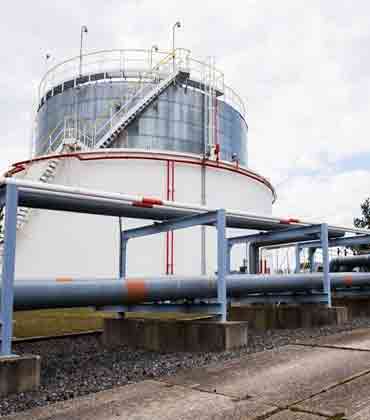
Innovative Approaches to Enhancing Natural Gas Storage
Innovations in natural gas storage technologies are transforming energy storage and distribution.
EDITORIAL
Challenges and Opportunities in the U.S. Energy Transition
The U.S. energy market is undergoing a significant transformation driven by policy shifts, technological advancements, and evolving economic forces. Renewable energy sources have seen remarkable growth, now accounting for over 22% of domestically produced electricity. Wind energy contributes more than 10%, while solar continues to expand.
This progress has been supported by legislative measures such as the Inflation Reduction Act (IRA) of 2022, which allocated approximately USD400 billion to climate initiatives, primarily through tax incentives for renewable energy development. However, the energy sector also faces substantial challenges that could slow its transition to a cleaner and more resilient future.
Trade tensions have become a pressing issue, with new tariffs on imports from Mexico, Canada, and China threatening to increase costs for clean energy technology while triggering retaliatory measures that could impact U.S. energy exports. Another challenge is grid reliability, as seen in Texas, where prolonged low wind speeds have forced greater reliance on fossil fuels. This has created scheduling issues for power plant maintenance and raised concerns about energy availability during peak demand periods. In addition, policy uncertainty is affecting investment confidence. The current administration’s efforts to roll back key elements of the IRA, including funding for clean energy programs, could undermine long-term sustainability goals.
To address these challenges, several strategies are being pursued. Infrastructure investments, including a USD 11 billion grid modernization effort under the Infrastructure Investment and Jobs Act, aim to enhance grid resilience and support renewable energy integration. Technological advancements in energy storage and smart grid systems are also helping to improve efficiency and reliability. Studies from the National Renewable Energy Laboratory emphasize the urgency of deploying clean energy technologies to reach a net-zero power grid by 2035.
Despite these challenges, the U.S. energy transition remains on track. By 2030, over USD 2 trillion is expected to be invested in energy infrastructure, reinforcing the shift toward renewables. With continued policy support and strategic investments, the U.S. can navigate its energy challenges and build a more sustainable, secure, and innovative future.
In this edition, we feature invaluable opinions from leaders who have been influencing the U.S. energy sector for some time now. They discuss the market in detail and share their industry experience. We believe these expert perspectives will help you make better and more informed business decisions.
