
Thank you for Subscribing to Energy Business Review Weekly Brief
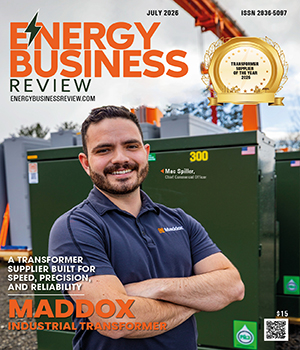
Maddox Industrial Transformer
A Transformer Supplier Built for Speed, Precision, and Reliability
At 6:00 a.m. on a freezing Sunday morning, a property owner began dialing transformer suppliers across the country. A winter storm had just knocked out power to an adult day care, a K–12 school, and a pharmacy. With no heat and no lights, time meant safety. He called twenty companies trying to get replacement units. The first nineteen companies gave him the same answer in different words: We cannot help you, at least not soon. When the property owner called Maddox Industrial Transformer, the team confirmed within five minutes that the required transformers were in stock and could be delivered the next day, even though the units were located 14 hours away. He purchased two 500 kVA remanufactured padmount transformers, which were more affordable than new units and could be deployed more quickly than any other option. Ultimately, the transformers were installed and operational within 48 hours. “In an industry where lead times often stretch for months, even a year, we have built a business around speed with certainty,” says Mac Spiller, Chief Commercial Officer of Maddox Industrial Transformer. The company focuses primarily on the commercial and industrial (C&I) transformer market in North America, serving contractors, manufacturers, data centers, and renewable energy developers, where timelines are often tighter and delays carry immediate operational consequences. Unlike many competitors, Maddox does not prioritize large utility backlogs, allowing it to stay responsive and better support C&I customers who cannot afford long lead times. It operates across ten product lines and offers three primary options: new transformers available in stock, new units engineered to order, and remanufactured transformers. Maddox supplies a range of transformer types, including padmount, substation, dry-type, and polemount transformers designed for commercial and industrial power systems.
Oil and Gas
What challenges arise for fuel suppliers and station operators during volatile fuel market conditions? When fuel markets tighten, most suppliers pull back. Deliveries get delayed, prices spike, and for gas station owners, every empty pump hit revenue, customer trust, and long-term competitiveness. This is where Double AA Corporation operates differently. Working across both wholesale and retail, the company sources and delivers refined fuel products, including gasoline, diesel, and renewable alternatives, to a network of branded and independent operators, while also managing its own portfolio of gas stations and convenience stores. For nearly four decades, the California-based distributor has built its reputation on consistency, ensuring stations and customers stay supplied even in volatile markets. This dual role positions Double AA Corporation not just as a supplier, but as a strategic partner to station owners navigating pricing pressures, branding decisions, and operational challenges. “If there’s uncertainty in the market, we make sure nobody feels it at the pump. Our stations stay supplied, and our partners know we’re not going to cut them off,” says Abed Aish, COO. How does Double AA Corporation manage fuel supply continuity across changing market environments? To deliver on this, the company operates with a defined supply mandate, securing enough fuel to meet 100 percent of demand across its stations and core customers. This is supported through long-term refinery contracts, relationships with shippers, and participation in spot markets. Rather than locking in all volumes, Double AA Corporation balances contracted supply with market-based purchasing to manage pricing exposure while retaining flexibility. Contracted volumes provide stability, while spot purchasing allows the company to respond to changes in availability and pricing. The focus is not on eliminating risk, but on maintaining continuity under varying market conditions. Once fuel availability is secured, Double AA Corporation shifts its focus to execution at the station level. It prioritizes reliable delivery timing, consistent site maintenance, and customer experience, ensuring pumps remain operational, stores are stocked, and locations are clean, safe, and welcoming.

Oil and Gas
Martindale Consultants
What Is a Vendor Contract Compliance Audit in Oil and Gas?
Cody Deckard, Service Consultant
In the high-stakes world of oil and gas, contracts are the backbone of every project. Operators depend on a network of vendors to deliver services ranging from drilling and transportation to maintenance and field operations. Each of these relationships is governed by complex agreements that define pricing, scope, and expectations. As projects grow in scale and duration, verifying that every charge aligns with contractual terms becomes a daunting task.
Energy Consulting
Shared Solar Advisors
Simplifying Community Solar Adoption through Direct Engagement
Sean WillChene, Founder and CEO
Many consumers interested in renewable energy face confusion around enrollment processes, eligibility requirements and billing structures. While community solar offers an accessible alternative to traditional rooftop systems, the complexity of navigating options often prevents adoption. Shared Solar Advisor addresses this gap by focusing on accessibility and clarity in the enrollment process. Its model removes barriers that typically discourage participation. “Our work lies in removing that friction entirely,” says Riley Woollen, chief operating officer. Removing Complexity from Solar Enrollment A primary challenge in the clean energy market is not resistance, but a lack of awareness and understanding. Many consumers assume solar requires installation, upfront investment or long-term commitments, which limits participation.

Solar and Battery Storage

Repurposing Resources: Installing New Battery Energy Storage Utilizing Existing Infrastructure
Julian Kaufmann, Senior Vice President, CAMS
Energy Marketing

Emerging Energy Industry: Perks and Pitfalls
Donell Banks, Senior Advisor, Southern Nuclear
Energy Consulting
More Collaboration Needed In a Rapidly Growing Solar Industry
Stephen Branscum, Senior Energy Manager, Walmart [NYSE: WMT]
Energy Consulting

Charting the Path to Hydrogen Economy for a Sustainable Tomorrow
Henry Hui, Corporate VP, H2 Strategy & Energy Infrastructure, Nikkiso Clean Energy & Industrial Gases
Oil and Gas

Strategic Initiatives for a Cleaner Energy Future
Ivon Louis-Letang, Energy Manager, Eversource Energy [NYSE: ES]
EV Charging

Advancing Hydrogen Innovation for a Sustainable Future
Samuel McDermott, Technical Manager Customer Innovation Solutions, Enbridge Gas
Oil and Gas

The Future of Electric Utilities
Roderick Conwell, Senior Director of Operations, The AES Corporation

IN MY OPINION
Oilfield Services
Will The Power Crunch Slowdown The Meteoric Rise Of Waste To Energy Projects
Ivor Castelino, Energy Transition Leader - Biogas and Carbon Capture, Bloom Energy

LAST WORD
Energy Consulting
Driving Proactive Safety through Authentic Leadership
Britt Howard, Vice President, Worley
IN FOCUS

Optimizing Operations: Technology and Strategy in the Petroleum Industry
The petroleum market evolves under demand, transition pressures, and technology, balancing operational reliability with future energy transformations and strategic partnerships.
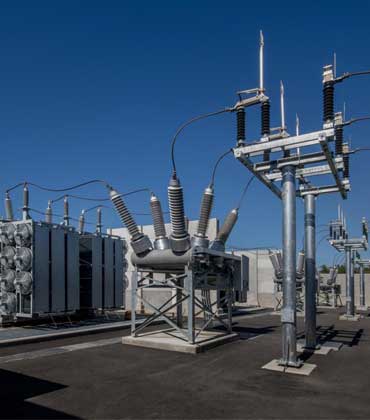
Transformer Suppliers Powering the Future of Global Energy Infrastructure
Transformer suppliers drive grid modernization through efficient technologies, renewable integration, and reliable power infrastructure solutions supporting global energy transition.
EDITORIAL
The New Imperative: Reliability, Resilience and Innovation
The energy industry is entering a new phase defined by resilience, supply chain agility and the ability to deliver reliable energy in a rapidly changing world. In this edition, Energy Business Review spotlights organizations driving progress through operational excellence, innovation and dependable execution.
Leading this issue is Maddox Industrial Transformer, recognized as the Transformer Supplier of the Year 2026. As utilities, data centers, manufacturers and renewable energy developers contend with equipment shortages and long lead times, Maddox stands out for its speed, precision and reliability. Through its nationwide network and comprehensive services, it helps customers secure critical power equipment when every day matters.
This edition also recognizes Double AA Corporation, honored as the Top Petroleum Product Company 2026, for building a dependable distribution network that maintains supply during market fluctuations while strengthening customer confidence through localized strategies. Also featured is Martindale Consultants, named the Top Oil and Gas Accounting Consulting Firm 2026, helping operators improve financial transparency, reduce risk and strengthen vendor accountability through contract compliance auditing.
We also feature Summit Energy Solutions, recognized as the Top Utility Rate Management Service 2026, for helping organizations bring greater predictability to energy costs through strategic procurement and long-term advisory services. Rounding out this edition is Shared Solar Advisors, honored as the Top HassleFree Clean Energy Service 2026, for making community solar more accessible through transparent guidance and a streamlined customer enrollment experience.
This issue also features insights from industry leaders tackling some of energy’s biggest challenges. Pamela Sporborg, Director, Transmission and Market Strategy at Portland General Electric, explores regional transmission partnerships, market governance and virtual power plants. Stephen Branscum, Senior Energy Manager at Walmart, discusses stronger collaboration across the solar value chain to improve safety, reliability and long-term performance.
We invite you to explore the stories and insights featured in this edition and the organizations helping shape the future of energy.
