
Thank you for Subscribing to Energy Business Review Weekly Brief
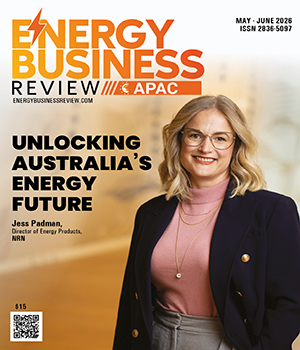
While Australian Virtual Power Plants (VPPs) are in their early stages, the industry is gradually realising the immense potential concealed within behind-the-meter batteries to bolster energy distribution. However, a puzzling question emerges: why does AEMO’s (Australian Energy Market Operator) projection indicate that only a fraction of solar installations will feature VPPenabled batteries by 2030? This article will delve into the three key reasons behind this projection and present a groundbreaking solution to this challenge. The Australian energy landscape is at a crossroads. With sustainability and power resiliency taking centre stage, the need for innovative solutions has never been greater. The Challenge: AEMO’s Forecast As we peer into the future, AEMO’s (Australian Energy Market Operator) forecast raises intriguing questions. By 2030, only a small percentage of solar installations are projected to incorporate VPP-enabled batteries. This forecast hints at three pivotal challenges that need addressing. 1. The Cost Barrier: CAPEX Concerns The first challenge concerns the significant capital expenditure (CAPEX) required for battery installations. While solar systems have become more accessible, batteries with substantial kWh capacity still come at a premium. The cost gap between a standard 5 kW solar system and a highcapacity battery is substantial. The cost-of-living crisis further compounds the issue. Alarmingly, we’ve witnessed a decline in potential customers willing to invest in solar and battery systems, particularly among young families grappling with budget constraints, despite often being the ones who could benefit the most. 2. Rental Properties: The Incentive Dilemma The second challenge lies in the realm of rental properties. Installing solar and battery systems in these homes often presents a classic dilemma. Property owners possess the authority to make such installations, but the tenants primarily accrue the financial benefits. Whi
Energy Consulting Provider
The Asia-Pacific (APAC) region is undergoing a transformative phase in the utility sector. Amid the rapid economic expansion and technological advancements, utility organizations are compelled to adapt to this evolving environment. One of the key aspects of this adaptation is to ensure the security and stability of the power grid, which is essential for the economic and social development of the region. Gridman, a company deeply embedded in this dynamic setting, offers real-time grid visibility, facilitating quick problem identification and resolution. Beyond monitoring, it enhances operational efficiency and cuts costs through a comprehensive range of services. The services encompass a wide array of critical functions, including power systems studies and analysis, power system protection, maintenance analysis, optimization, and power system design. A variety of clients—ranging from transmission and distribution operators to energy developers and industrial giants like ABB, Siemens, and Alstom—rely on Gridman for tailored strategies. They depend on Gridman’s skilled team of power system specialists. These professionals possess international experience and varying professional backgrounds, providing unique insights into the challenges of transmission, distribution, and power generation. This multidisciplinary expertise guarantees that Gridman offers the most effective solutions for each project. Originating from Slovakia, Gridman boasts a track record of delivering expert solutions, innovative products and high-quality services. “Since 2018, we have completed over 200 projects, locally and internationally, advancing utility infrastructure capabilities significantly,” says Vladimir Kristof, managing director. Long-term client relationships developed through consistent collaboration underpin Gridman’s success. This conviction to customer satisfaction shapes the company’s problem-solving approaches in a complex industry. Gridman employs an innovative, multifaceted strategy that considers technical expertise, financial factors, and market conditions. Investments in team development ensure that engineers and consultants remain competitive and well-informed.

EPCI Services
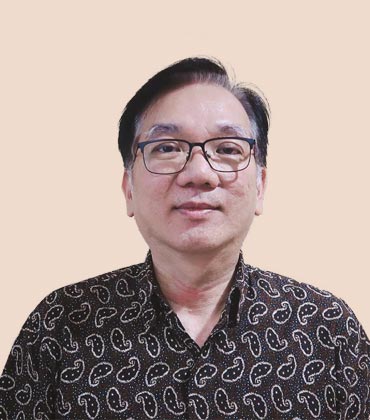
PT. Meindo Elang Indah (Meindo) is Indonesia's leading Engineering, Procurement, Construction, Installation and Commissioning (EPCIC) contractor, delivering comprehensive services covering the entire spectrum of EPCIC projects. Founded in 1987, it stands tall with a legacy of excellence and continued expansion. The firm’s unique in-house detail engineering and fabrication capabilities allow it to offer tailored solutions as per client requirements. At the foundation of their success is strong QHSE (Quality, Health, Safety and Environment) culture, with 80 million recordable manhours without LTI (Loss Time Injury). “From detailed engineering to offshore installation and commissioning, we offer a one-stop solution that streamlines project management and delivers exceptional results,” says Henky Kurniawan, Director of EPCI at Meindo. Over the years, the firm has invested strategically in expanding its capabilities, ensuring that the entire EPCIC process is accurately handled under one roof. Since developing the detailed engineering in 2012, Meindo’s detailed engineering team currently encompasses all major disciplines (process, process safety, civil and structural, mechanical, electrical, instrumentation, piping, pipeline engineering) and has gained recognition and respects of its clients. The company currently operates 2 fabrication yards in Indonesia with a total throughput of 56,000 metric-tons annually, equipped with modern fabrication equipment and location in a free trade zone, it has become an ideal choice for fabricating for international projects. Management’s unwavering commitment for QHSE mixed with the finesse of Indonesian craftsmanship prepares the ideal recipe to take up complex international projects. Since its acquisition, the yard has successfully delivered many complex time bound projects with highest quality, and it continues to be busy taking up new challenges each and every day.
Energy Engineering Service
For industrial and energy-related sectors, sustainability is a marathon run uphill. The finish line is clear, but the route is full of (un)expected budget overruns, project timeline detours, stalled execution, and strategy fatigue roadblocks. The cost of going green and staying green is often miles apart, making sustainability a balancing act between ideals and bottom lines. In these high-stakes environments, BARA Consultants steps in as a trusted coach who can turn messy realities into measurable wins. It specializes in helping industrial plants and energy operators shift to clean energy through innovative solutions in combustion, biomass, waste-to-energy, and technology development. “Our purpose is to empower every industrial plant to operate in a technically optimized and financially efficient way, enabling them to achieve their sustainability goals,” says Werner Botha, CEO. Rooted in this mission, BARA delivers tailored optimization solutions across all industrial plants, with specialized expertise in the thermochemical and power industries. It helps clients enhance their current systems and address inefficiencies by conducting process evaluations and implementing corrective measures. Whether it involves adjusting process parameters, upgrading equipment, or identifying governance issues, the company guides clients step by step, ensuring the recommended processes are both cost-effective and high-performing. BARA extends its expertise through consultative services in the biomass-to-energy sector, turning waste into valuable feedstock. The journey begins with due diligence and technology selection, followed by small-scale tests to assess feasibility and analyze feedstock quality and quantity. This thorough evaluation lays the groundwork for successful industrial-scale production. Throughout the process, BARA provides hands-on guidance to ensure every insight is translated into practical and implementable solutions. Following the evaluations, the company prepares a pro forma and economic model to recommend the most suitable technology route, like combustion, pyrolysis, or gasification. It even provides an initial consultation to guide clients forward, assessing their carbon intensity scores to enhance eligibility for tax incentives or carbon credits.

CXO INSIGHTS

Safety Management System
Eric T. Belle, VP Engineering and Standards, and Jonathan DeVries, VP of Strategy and Risk Management, NiSource
Partnerships in Energy Efficiency
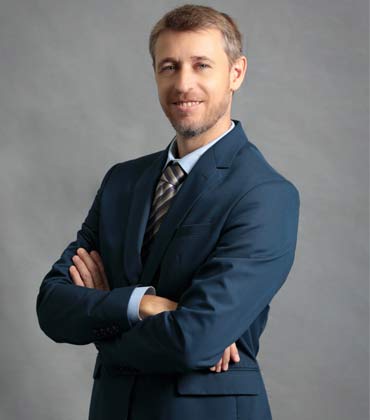
Jaume Millàs, Energy Director. Head of Energy Supply and Services Business Line, Veolia [EPA: VIE]

Production of Biogas and Biodiesel From Organic and Commercial Byproducts
Marjun Manahan, Operations Technology Head, Manila Water

Grid Transformation Engine
Ben Bristow, Head of Grid Transformation, Western Power

Watercare's Journey Towards Sustainability: Harnessing Solar Energy
Damien Dupont, Renewable Energy Specialist, Watercare Services

The Broader View of Sustainability
Dominic Dowling, Global Head of Sustainability & Risk, EDL

Becoming a Net Carbon Zero Water Utility
Charles Agnew, Head of Sustainability and Climate Change Adaptation, Sydney Water
Navigating the Path To Sustainable Transformation
Julie-Anna Smith, Director Strategy & Growth, Bureau Veritas Group

Advancing Diversity And Inclusion In Southeast Asia
Zulfa Ashida Zulkifli, Vice President of Human Resources, Velesto Energy Berhad [KLSE: VELESTO]

IN FOCUS
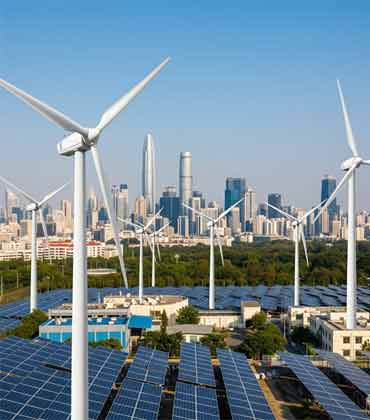
Integrating Sustainability in the APAC Energy Landscape
The APAC energy sector is shifting from carbon credits to integrating sustainability, driven by regulations, investor demand, technological advancements, and a growing need for climate resilience.
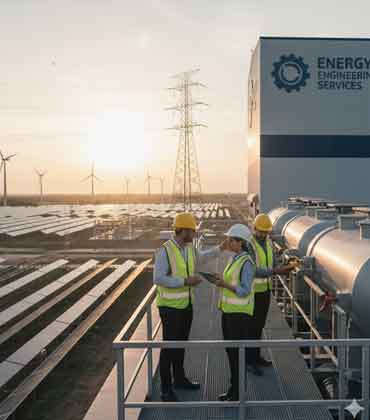
Engineering as a Service: The Next Frontier in Energy Innovation
The energy sector is shifting from traditional EPC models to agile ESPs, emphasizing digitalization, specialized expertise, and ongoing lifecycle asset optimization.
EDITORIAL
Shaping the Future: Key Trends in APAC’s Energy Consulting Landscape
Across the Asia-Pacific region, the energy sector is undergoing a profound transformation. With rising demand for renewable energy, improved efficiency, and smarter infrastructure, energy consulting firms have become vital partners in driving this change. These consultants are not just offering solutions—they’re helping shape resilient, future-ready energy ecosystems.
As the region shifts away from traditional fossil fuels, consultants are guiding businesses through the complexities of clean energy integration. Their expertise helps organizations navigate new regulations, unlock operational efficiencies, and seize opportunities in emerging green markets. Governments across APAC have also stepped in with supportive policies aimed at reducing emissions and accelerating the clean energy transition— further fueling the need for experienced consulting partners.
Digitalization has become another cornerstone of energy evolution. From predictive analytics and smart grids to IoT-enabled monitoring, consultants are helping companies adopt cuttingedge technologies that increase transparency, reliability, and sustainability in energy operations.
This dynamic environment has captured global investor attention, positioning APAC as a leading destination for energyrelated investments. A recent webinar by BloombergNEF spotlighted how the region has drawn the lion’s share of new capital, with China leading the charge and other APAC nations quickly following suit.
Despite regulatory hurdles and infrastructure gaps in some areas, consulting firms are finding innovative ways to adapt. They’re playing a proactive role in building capacity, developing long-term strategies, and enabling businesses to thrive in a fastchanging landscape.
This edition of Energy Business Review APAC highlights the consulting firms leading this transformation. Their work reflects not just market expertise, but a deep commitment to helping organizations move toward a cleaner, more sustainable, and more connected energy future.
