

Thank you for Subscribing to Energy Business Review Weekly Brief
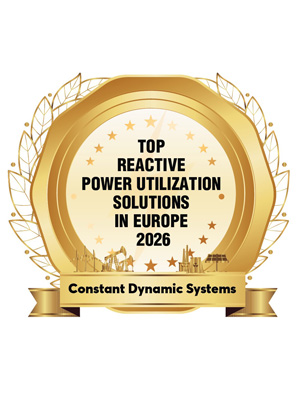
Constant Dynamic Systems
Rethinking Energy Utilisation through Smarter Engineering
The pursuit of more efficient engineering has led to major advances in propulsion, renewable energy and industrial systems. Yet one important question often gets overlooked. What if the next breakthrough is not about generating more energy, but about making better use of the energy we already have? Constant Dynamic Systems develops advanced propulsion technologies and complementary energy solutions that help the transport, renewable energy and industrial sectors accomplish more work with the same amount of energy. Drawing on the different behaviour of non-rectilinear fluid streams, it applies a single engineering philosophy to extract more useful work from existing energy inputs, reducing the need for larger systems or higher power consumption. Its portfolio includes patented propulsion systems, innovative wind energy solutions and advanced piezoelectric energy harvesting technologies. Protected by patents across the European Union and the United States, with continuing international IP expansion underway, these solutions serve different markets but share the same purpose of helping customers accomplish more work while reducing waste. Whether serving transport operators or renewable energy developers, Constant Dynamic Systems ultimately measures success by a simple outcome, helping customers complete more jobs with the same—or even lower—operating expense.
Sustainable Biomethane Fuel Supplier
CNG Fuels is accelerating the shift to low-carbon freight by building and operating the UK’s largest and only nationwide network of public-access, high-capacity biomethane refuelling stations. Purpose-built for heavy goods vehicles (HGV), the heaviest carbon emitters on British roads, this infrastructure offers fleet operators with a proven, immediate route to decarbonisation. The engine behind its impact runs on 100 percent renewable biomethane, produced from genuine waste, including food scraps, animal slurry, sewage and grass clippings, through anaerobic digestion. Chemically identical to fossil methane, the fuel can be injected into the UK’s existing gas grid and distributed through established infrastructure. When used in natural gas vehicles, it requires no engine modification or driver retraining, offering a drop-in, low-carbon alternative that’s easy to adopt—available today. Vehicles running on CNG Fuels’ biomethane cut emissions by more than 85 percent and reduce fuel costs by up to 30 percent. They deliver the same reliability and performance as diesel, without the trade-offs of other low-carbon options, such as long queues, complex refuelling or retraining needs. Refuelling takes just 8 to 10 minutes and supports ranges of up to 500 miles. Stations are open 24/7, unmanned and equipped with up to 14 high-throughput dispensers tailored to real-world logistics demands. “This is a business where uptime equals credibility,” says Baden Gowrie-Smith, CFO. “We built our name on never letting a truck turn away.” With over 2,000 trucks refuelling daily at 16 live stations, and three more opening soon, CNG Fuels has laid the foundation for mass-market adoption. Its current capacity exceeds 10,000 trucks per day, and with more than 120 stations in development, the company is scaling rapidly to meet growing demand. Backed by institutional investor Foresight Group, it plans to launch at least three new stations annually, strategically positioned along key logistics corridors. Low-Carbon Freight That Pays Off Biomethane’s operational simplicity is matched by its financial clarity. With a typical five-year vehicle lifecycle, many fleets are now onboarding 40 to 50 trucks at a time, finding that switching to biomethane offers a strong return on investment while insulating them from volatile diesel markets and tightening emissions targets.
Energy Asset Management Services

In renewable energy, the only constant is movement. Technology changes. Rules shift. Markets reset before assets reach maturity. Loyalty in this environment is won by partners who provide stability across the whole life of an asset. Enlight Energy Services has positioned itself around that premise. The company manages end-to-end photovoltaic (PV) investments, from development through construction (in a JV with an EPC company) and long-horizon asset management. This creates a single line of accountability and a cohesive view of risk, performance, and compliance from day one to year twenty. The structure works because the expertise is deep. Administrative, finance, accounting, technical operations, and ESG teams convert dense regulations into operating assets. The company’s streamlined organisational structure promotes a rapid and efficient decision-making process, which is crucial in markets where timing determines success. In Italy, for instance, Enlight has supported investors entering emerging market segments through workshops and data-driven insights that shaped their strategies. Technical proficiency alone, however, does not explain the company’s enduring partnerships. Enlight operates on a people-centric philosophy, viewing asset management as collaboration rather than transaction. Open communication, long-term trust-based relationships, and internal focus on employee engagement and training (on both hard and soft skills) ensure continuity and preserve “historical” knowledge of client assets. “We consistently resonate with clients, reinforcing our loyalty to our services in the renewable energy space by focusing on integrated lifecycle management, multidisciplinary expertise, efficient decision-making, and a strong commitment to client relationships,” says Maria Sabella, CEO.
Solar Street Light

Leading Innovation in Renewable Energy
Alexander Vogt, Head of Metering Services, LichtBlick SE
Solar Photovoltaic

Ushering a New Era of Renewable Energy
Tryggvi por Herbertsson, Global Head of Hydrogen Strategy and Partnership, QAIR Group
Solar Photovoltaic

Building VPPs: From Reactive Services to Strategic Foresight
Mark Meyrick, General Manager, Ecotricity Smart Grid Limited
Energy Consulting

Rebalancing The Uk's Decarbonisation Strategy
Marcos Matijasevich, Head of Low Carbon Transition, Essar Oil (Uk) Limited
Energy Staffing

From Geothermal Resource To Industrial Opportunity
Dr Guy Oliver, Director, Energy Transition & Data Science, Geolog International
IN MY OPINION
Battery Manufacturing
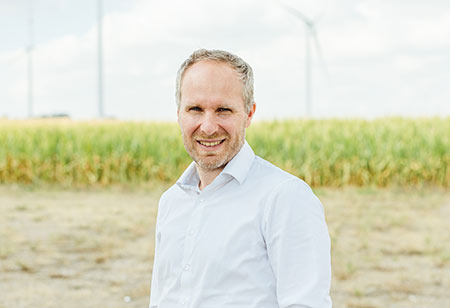
Wind Energy Boom in Czechia: A Window of Opportunity
Stanislav Cetkovsky, Director of Wind Energy Development & Operations, ČEZ [FRA: CEZ]

LAST WORD
Natural Gas
Hands-On Training for Real-World Utility Operations
Mike Ritz, Operations Training Manager, Chesapeake Utilities Corporation
IN FOCUS

Advancements in Wind Power Corrosion Protection Solutions across Europe
Corrosion protection improves turbine durability, efficiency, asset lifespan, and maintenance reliability across wind infrastructure.

Reactive Power Solutions: Strengthening Europe's Modern Energy Infrastructure
Reactive power utilisation solutions in Europe improve voltage stability, strengthen grid efficiency, support renewable integration, and enhance transmission reliability.
EDITORIAL
Engineering a More Efficient Energy Future
Europe’s energy landscape is placing greater emphasis on efficiency, renewable generation and resilient systems. This edition of Energy Business Review Europe examines how practical engineering, responsible development and workforce readiness are shaping the next phase of the energy sector.
Our cover story features Constant Dynamic Systems, named Top Reactive Power Utilization Solutions in Europe 2026, whose approach challenges the assumption that greater performance must come from greater energy input. Its LITEMIGHT TOWER technology focuses on wind energy using flexible wind catchers that improve the efficiency of capturing wind and reduce reverse drag. It also develops its ideas through prototype and field testing, which involves working with universities.
The issue also examines the conditions needed for energy innovation to succeed beyond the technology itself. In his article, Cetkovsky, Director of Wind Energy Development & Operations, ČEZ, highlights the emerging opportunity for wind energy development in Czechia. He emphasises regulatory progress, stronger infrastructure and meaningful community participation as critical factors in creating successful projects.
From the workforce perspective, Mike Ritz, Operations Training Manager, Chesapeake Utilities Corporation, believes that any good training program should be very much linked to operations in the field. In his opinion, there should always be learning, constant communication between the operations managers and adaptation to technology.
Together, these perspectives show that progress in energy depends on more than new technology. It requires sound engineering, practical implementation and people prepared to apply it. We invite readers to explore the stories and perspectives shaping this evolving energy landscape.
