

Thank you for Subscribing to Energy Business Review Weekly Brief


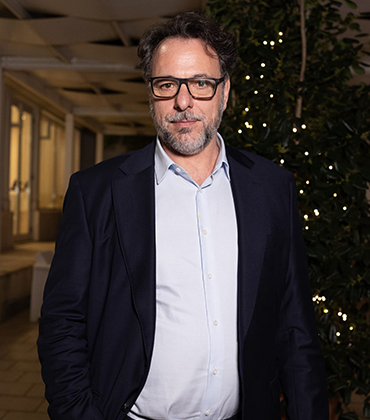 Vassilis Thomas, CEO and Technical Director
 What challenges create uncertainty in modern energy infrastructure project delivery today?
A recent 60 MW solar project connected at 132 kV illustrates the approach. The appointed ICP lacked the capacity to complete critical protection works as energisation approached. Although interconnection sat outside Gemec’s contractual scope, the company intervened, coordinated directly with the Distribution Network Operator and completed the outstanding requirements. The plant energised without delay. Engineering familiarity with substations and grid operations prevented escalation at a critical moment.
Uncertainty defines energy infrastructure delivery. Grid requirements shift mid-project. Supply chains tighten. Skilled labour remains constrained. In complex infrastructure delivery, coordination risk often increases when responsibilities are distributed across contractors operating on separate timelines and incentives. Misalignment compounds. Escalation follows. Legal departments become involved in issues that began as coordination gaps.
How does Gemec’s integrated model prevent coordination failures and project escalation risks?
Gemec is structured to prevent that progression.
The company positions itself first and foremost as an engineering firm. It retains 100 percent control of the project lifecycle—from design and procurement to construction, grid coordination and long-term operation. Responsibility does not transfer between silos; it remains continuous.
When one segment slows, teams are reallocated internally. When grid requirements change, the engineers who designed the system resolve the issue. Grid studies are performed in-house, and protection schemes are aligned during design rather than deferred to energisation.
“We have a holistic approach. Everything in-house gives us 100 percent control over the process and eliminates many of the uncertainty factors present in today’s market,” says Vassilis Thomas, CEO and Technical Director.
For Vassilis, lifecycle control functions as a dispute-prevention mechanism. “You have to avoid at all costs finding yourself discussing with the client’s lawyers.” Legal escalation signals upstream engineering misalignment. Clear scope definition, early development involvement and integrated oversight are designed to prevent contractual friction before construction begins. Delivery discipline is measured by how rarely escalation occurs.
Why does Gemec prioritize engineering control over financial scale in project delivery?
In this model, certainty does not depend on financial scale. Vassilis says that engineering control—not balance sheet size—determines whether projects energise successfully. Investors often treat capital strength as a proxy for safety. He contends that proven execution capability carries greater weight in technically sensitive grid environments.
Growth is intentionally calibrated to preserve engineering oversight. Gemec limits project volume to maintain that control and opts for slow but safe growth. It works with a concentrated client base, often delivering multi-plant portfolios over several years. Early participation during development aligns permitting, constructability and grid strategy long before construction begins. Certainty results from engineering cohesion rather than financial scale.
Integrated Grid Responsibility
How does Gemec manage grid interconnection risks within renewable energy project execution?
Grid interconnection represents one of the highest technical risks in renewable delivery. In the UK, certified Independent Connection Providers under the National Electricity Registration Scheme execute connection works. Where required, Gemec incorporates and manages those works within its EPC framework while maintaining direct relationships with Distribution Network Operators.
-
We have a holistic approach. Everything in-house gives us 100 percent control over the process and eliminates many of the uncertainty factors present in today’s market.
A recent 60 MW solar project connected at 132 kV illustrates the approach. The appointed ICP lacked the capacity to complete critical protection works as energisation approached. Although interconnection sat outside Gemec’s contractual scope, the company intervened, coordinated directly with the Distribution Network Operator and completed the outstanding requirements. The plant energised without delay. Engineering familiarity with substations and grid operations prevented escalation at a critical moment.
Engineering-Led Operations and Workforce Discipline
Over 800 megawatts (including BESS plants) operate under Gemec’s in-house maintenance structure. The same engineers who design and construct each plant remain responsible for organising the long-term operational teams. Technical continuity shortens diagnostic time and preserves operational context. Proprietary monitoring portals and parallel SCADA systems integrate automated production checks and project-specific alarms, with operational data informing subsequent design decisions.
Workforce capacity represents the primary structural challenge facing EPC delivery, particularly in the UK following Brexit. Experienced engineers with grid and substation expertise are in short supply. Vassilis identifies manpower—not capital—as the decisive constraint on execution. Rather than depend solely on an increasingly competitive external market, Gemec builds capability internally, recruiting and training young engineers specifically in substation engineering, grid integration and renewable delivery.
Energy infrastructure procurement frequently equates financial scale with safety. Vassilis disputes that logic directly. Balance sheet size does not guarantee successful energisation, regulatory alignment or grid stability. Engineering control does. He argues that smaller firms with concentrated accountability and integrated technical oversight can outperform larger organisations where responsibility is diluted.
This engineering-led approach has led Energy Business Review Europe to name Gemec Top Energy EPC Contractor 2026, recognising a delivery model built on engineering depth, disciplined growth and lifecycle accountability rather than capital scale.
Engineering Certainty in Renewable Energy EPC
Europe’s renewable buildout has shifted the risk profile of engineering, procurement and construction. Grid congestion, permitting delays, workforce shortages and contractor fragmentation have made delivery certainty more valuable than scale alone. Executives commissioning energy infrastructure are no longer comparing bids on price and balance sheet strength in isolation. They are judging whether an EPC partner can control interfaces, anticipate grid constraints and remain accountable beyond handover.
Uncertainty often enters a project through fragmentation. When design, procurement, civil works, cable installation, substation construction and long-term maintenance are handled by separate entities, each carries its own timeline and commercial priorities. Coordination becomes contractual rather than practical. Delays compound at the connection stage, particularly under UK grid frameworks where Distribution Network Operators, Independent Connection Providers and compliance schemes such as G99 and G100 add layers of technical scrutiny. The ability to see the full picture, from development through energisation and into operations, distinguishes firms that can keep programmes aligned with investor expectations.
In this environment, delivery strength rests on three intertwined capabilities. Control over the full construction cycle limits exposure to third-party slippage and enables internal reallocation of resources when bottlenecks appear. Early engagement during development and permitting strengthens design integrity and reduces late-stage redesign around grid requirements. Sustained involvement in operation and maintenance creates feedback loops that inform future engineering decisions, lowering downtime and improving asset performance over time. Investors benefit when the same organisation that designs and builds a plant also understands how it performs under live grid conditions.
Grid interconnection has become a decisive pressure point. Projects connected at 132 kV and above require technical fluency in substation engineering, protection systems and liaison with network operators. An EPC contractor that lacks internal expertise in these domains may struggle when an Independent Connection Provider falters or when compliance issues arise during energisation. By contrast, firms that conduct their own grid studies and maintain direct working relationships with network operators are better positioned to intervene at critical moments, align documentation and secure timely connection.
Workforce strategy has also moved to the forefront, particularly in the UK, following Brexit. Experienced electrical engineers and commissioning specialists are scarce. Contractors that invest in developing engineers internally and standardising processes across design, construction and maintenance are more likely to sustain output without sacrificing control. Measured growth, even if it limits annual project volume, can preserve delivery discipline in a market where overextension frequently undermines performance.
Gemec exemplifies this integrated model. It keeps design, procurement, construction and maintenance in-house, allowing it to shift resources across project phases and maintain schedule and budget control. It participates, from early development and permitting stages, shaping designs submitted to authorities and remaining through portfolio buildouts. Its engineering focus extends into proprietary monitoring tools and parallel SCADA oversight that enhance plant supervision and reduce downtime. In a recent 60 MW, 132 kV project, it intervened when an Independent Connection Provider failed, completing protection and compliance works necessary for energisation. For executives prioritising assured delivery over headline financial scale, Gemec stands out as a disciplined partner capable of guiding renewable assets from development through long-term operation.
...Read more
Company
Gemec
Management
Vassilis Thomas, CEO and Technical Director
Description
Gemec delivers EPC projects through a fully integrated, in-house engineering structure, covering design, construction, grid coordination and operations. By maintaining direct DNO relationships, managing repeat client portfolios and prioritising disciplined growth, it reduces contractual risk and ensures reliable plant energisation and long-term performance.
