
Thank you for Subscribing to Energy Business Review Weekly Brief
A featured contribution from Leadership Perspectives, a curated forum for energy sector leaders across utilities, oil and gas, and power generation, nominated by our subscribers and vetted by the Energy Business Review Editorial Board.

Siemens Energy AG [ETR: ENR]
Green Hydrogen Fabrication Prepared For Gigawatt Scale
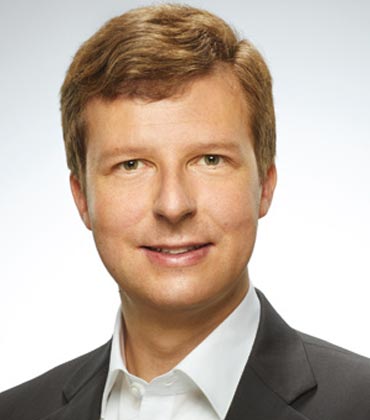
Dr. Sebastian Neubert
One of the most important challenges today is the decarbonization of the global economy. The key to meeting this challenge is to consistently expand renewable energy sources in combination with the concept of sector coupling. As the fabrication and the consumption of renewable energy often do not take place at the same time and magnitude, a hydrogen based sector coupling will be the foundation for energy transition.
 The Siemens Energy electrolyzer portfolio based on Proton Exchange Membrane (PEM) electrolysis is key in the decarbonization of hydrogen fabrication and the implementation of sector coupling. It is tailored for the fabrication of “green” hydrogen from fluctuating energy sources such as sun and wind.
Based on a proven product portfolio, Siemens Energy has recently taken important steps for scaling of “green” hydrogen fabrication in collaboration with partners:
1) Start of the first Gigawatt production at the multi-Gigawatt factory for electrolyzers in 2023 localized in Berlin
In Berlin Huttenstrasse, a new production lines for the electrolyzers are being set up on 2,000 square meters at a cost of around 30 million euros. Today, the site mainly manufactures gas turbines, which are among the most powerful and efficient in the world. These can already be operated with up to 50 percent hydrogen, and by 2030 complete hydrogen operation should be possible. Siemens Energy is now pooling its expertise in both these areas in Berlin to ensure a reliable and successful energy transition to a new energy mix.
In Berlin Huttenstrasse, new production lines for the electrolyzers are being set up on 2,000 square meters at a cost of around 30 million euros. Today, the site mainly manufactures gas turbines, which are among the most powerful and efficient in the world
2) Successful execution of first large scale hydrogen projects
Siemens Energy is integrating its electrolyzer portfolio in solutions to fabricate hydrogen or e-fuels. The following projects are recent examples for large scale installation of hydrogen fabrication infrastructure by delivered Siemens Energy:
• Large-scale e-Methanol project in Kassoe (Denmark): Siemens Energy is implementing a hydrogen plant in the 50 MW range for European Energy. The hydrogen will be used to synthesize a-Methanol as a basis for CO2 neutral shipping.
• Large scale electrolyzer partnership with Air Liquide (France):
Siemens Energy is installing a hydrogen plant with a capacity of 30 MW. Additional installations will follow. - Fuel from wind and water in Haru Oni (Chile):
 Siemens Energy is delivering the electrolyzers for the first integrated and commercial large-scale plant for the production of climate neutral e-fuels. In the pilot phase, e-Methanol production will initially reach around 750.00 liters per year by 2022, which is the basis for e-Gasoline.
The example of Siemens Energy AG demonstrates, that energy companies have been taking important steps on the journey towards “green” hydrogen fabrication and towards sector coupling. However, the industry still has significant steps to take on the journey towards decarbonization of the global economy, e.g. the cost competitiveness of “green” hydrogen with fossil based hydrogen fabrication, the availability of renewable energy. Both energy companies and whole society will have to contribute in order to take these steps successfully.
The articles from these contributors are based on their personal expertise and viewpoints, and do not necessarily reflect the opinions of their employers or affiliated organizations.
