


Thank you for Subscribing to Energy Business Review Weekly Brief


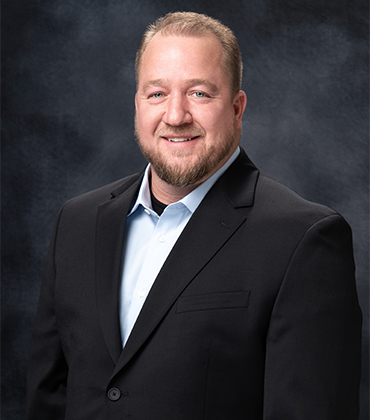 Michael Allumbaugh, Owner and President
 Why does scale alone fail to deliver consistent results in complex well remediation operations?
From Callout to Diagnosis
At STX Slickline, family shows up in the way the crews are built.
Pressure changes, fluid loading, sand accumulation and downhole obstructions are routine conditions in oilfield operations and often occur simultaneously. Managing them requires correctly interpreting the well and addressing each issue in the proper sequence. The common assumption that larger fleets and more crews deliver better outcomes does not always hold. In well remediation, results depend far more on judgment, continuity and precise execution than on scale alone.
Michael Allumbaugh, owner and president of STX Slickline, has worked in that environment long enough to recognize the distinction of quality over quantity in practice.
Decades of involvement in wellsite decisions, crew-level execution and problem-solving under pressure have shown him where scale begins to diverge from execution. Large service companies can deploy hundreds of field crews, extending their reach across the market. But as operations expand, decision-making often moves farther from wellsite execution. Customer interaction becomes less direct, context is transferred across more layers and the level of attention required to work through complex well conditions becomes harder to maintain.
“I would rather run one quality crew and solve one problem at a time than address 15 different issues and not do as thorough a job,” says Allumbaugh.
How does STX Slickline maintain execution quality through a focused operational model?
That perspective defines how STX Slickline operates.
Its approach centers on maintaining control at the well level, where accurate interpretation and disciplined execution determine the outcome. By limiting scale and keeping crews closely aligned with each job, STX ensures decisions are made with full context and carried through without fragmentation.
It operates with five crews, each led by a supervisor and supported by one to two helpers, with every unit stocked with the right tools. That small scale does not limit the operation’s focus. It sharpens it. The crew arrives ready to assess the well, read the indicators, select the right tools and work through the problem, whether it’s remediation, troubleshooting or fishing. A tight structure also protects consistency across the customer base, giving smaller operators the same level of attention and field commitment as major producers.
“When our crew shows up on location, the value is in being there that day,” says Allumbaugh. “We’re not looking at tomorrow. We’re not thinking about yesterday. The value is in that day, right there and putting forth the best effort.”
I would rather run one quality crew and solve one problem at a time than address 15 different issues and not do as thorough a job.
From Callout to Diagnosis
What role does real-time diagnosis play in resolving complex downhole conditions effectively?
Operators call Allumbaugh directly or the supervisor they already know. A familiar line of contact keeps service personal and accountability clear. That direct access reduces handoffs, preserves context and immediately puts the problem in front of the people responsible for solving it. In a line of work where no two wells present the same way, continuity helps STX Slickline respond with greater clarity, speed and control.
 In the field, the work begins with diagnosis, identifying what has shifted from the well’s normal range. Though the client may describe the issue, conditions in wells extending 12,000 to 14,000 feet below the surface are difficult for them to assess. The team considers pressure behavior, fluid levels, sand accumulation and other indicators, applying decades of specialized slickline experience to interpret those signals in real time.
The analysis helps the crew determine what needs to happen first. Fluid may need to be cleared before the crew can read the well. Sand and debris may need to be removed before the real obstruction can be identified. The team follows a clear sequence of problem-solving so one issue does not hide another, and the right corrective action can be taken to restore well performance.
A lost tool may be the cause of any of these conditions, and in a position where it cannot easily be retrieved. Fishing is handled as layered remediation. As one of its most trusted niches, the focus is not simply on retrieval. The more important questions are why the tool failed, where it is stuck and what kind of movement will free it without creating a secondary problem below the surface. From there, the crew works out a plan and works through the mechanics of access, controlled manipulation and recovery in the right order.
Each STX unit remains on standby, carrying the specialized tools and diagnostic equipment needed to respond as efficiently as possible.
That discipline is reinforced by how closely Allumbaugh stays involved in the work itself. Even when he is not on location, he remains in communication with each crew and each job. Reporting flows back through a shared digital system, giving supervisors access to job history, site-specific details and stored field knowledge can increase efficiency in future visits.
“For me, the principle is simple; good data in leads to good data out,” says Allumbaugh. “Our crews are better prepared, our decisions are sharper and operators get continuity from one job to the next.”
Our People, Our Family
Why is specialized experience critical in ensuring consistent outcomes in slickline operations?
-
When our crew shows up on location, the value is in being there that day. We’re not looking at tomorrow. We’re not thinking about yesterday. The value is in that day, right there and putting forth the best effort.
At STX Slickline, family shows up in the way the crews are built.
Many of the people around Allumbaugh have been with him for years. Each supervisor was either trained by him or came up through the same background that shaped STX Slickline’s standards.
The least experienced supervisor has 15 years in the field. Two have 30, and Allumbaugh brings more than three decades of his own. The larger point is not the number, but the focus behind it. These are not broad oilfield careers spread across multiple service lines. They are careers built in slickline, well remediation and fishing. Customers see the result in familiar crews, sound judgment and a standard that holds up from one job to the next.
Many oilfield veterans have spent decades moving across categories. STX Slickline’s people stayed in the same lane. “We’ve spent that entire 100 plus years doing exactly what we do every day,” he says.
That kind of repetition gives crews more than years on paper. It gives them sharper judgment and steadier execution under pressure.
For Allumbaugh, that consistency matters more than equipment alone. STX Slickline may earn praise for the quality of its units and tools, but he is clear about the defining strength.
“It’s our people, hands down.”
 Customers are not simply calling for a service truck. They are looking for expertise, which is why STX Slickline places so much value on being knowledgeable, personable and approachable in the field.
This people-first mindset shapes customer relationships, as well. Allumbaugh stays close to operators, checks in regularly and asks how the service, equipment and crews are performing. The answer, he says, tends to be the same; strong equipment matters, but strong people matter more.
Over time, this ethos has helped STX Slickline do more than win one job at a time. It has helped build relationships that last for decades. Some operators have trusted STX Slickline with their wells for more than 30 years, a measure of service quality and the trust behind it.
Growth Without Breaking the Standard
How does disciplined growth protect operational integrity in a cyclical industry like oil and gas?
More equipment could be added. More crews could be put to work. The market can support that when activity is high. The harder question is whether growth can happen without weakening the discipline that made the operation valuable in the first place.
STX Slickline’s answer to that is, restraint.
The oil and gas industry remains cyclical. Expansion that looks smart in one stretch of the market can turn into a burden in the next. A business that grows too fast may find itself oversized when the cycle swings back. Organic growth offers a better path because it allows capacity to rise without breaking the operating model.
That means not taking on more debt than the business can comfortably carry. It means not adding people faster than standards can be maintained. It means not letting utilization take precedence over survivability. The point is not to stay small for the sake of looking disciplined. It is to protect the way the work gets done.
Named among the Top Oil and Gas Project Remediation and High-Pressure Fishing Solutions 2026 by Energy Business Review, STX Slickline reflects a simpler conviction—quality work in this category still depends on focusing on one well at a time. In an industry that often celebrates reach first, that discipline remains a differentiator in its own right.
Precision under Pressure: Evaluating Oil and Gas Well Remediation and Fishing Expertise
Oil and gas well remediation and high-pressure fishing demand a level of precision that extends beyond standard service execution. Wells operate in environments where visibility is absent and conditions shift unpredictably. Small deviations can disrupt production entirely. Decision-makers are not evaluating vendors on scale alone; they are assessing how effectively a provider can diagnose, intervene and restore performance in situations where uncertainty is the norm.
The underlying challenge lies in the nature of the well itself. Depth, pressure variability and the presence of debris such as sand or fluid buildup create conditions that cannot be directly observed. Operators must rely on interpretation of indicators rather than visual confirmation. Production decline, pressure inconsistencies or obstruction from foreign objects often require a structured, stepwise approach rather than rapid intervention. Success depends on how clearly a provider can isolate root causes and progress through each layer of the problem without introducing additional risk.
Consistency in execution becomes critical in this context. Many service providers attempt to address multiple wells or clients simultaneously, which can dilute focus at the site level. A more disciplined approach prioritizes concentrated attention on a single well condition at a time, ensuring each stage of remediation is fully resolved before moving forward. This method reduces the likelihood of incomplete fixes and recurring issues, which often carry higher long-term costs than the initial intervention.
Workforce continuity also plays a defining role. High turnover remains a persistent issue across the oil field, leading to variability in execution and loss of institutional knowledge. Teams that maintain long-term cohesion develop shared judgment, allowing them to interpret well conditions more effectively and respond with greater confidence. Depth of experience within a narrowly defined specialty strengthens decision-making in complex scenarios.
Another dimension involves adaptability across client profiles. While large operators may have extensive infrastructure and data support, smaller producers face the same fundamental well challenges. A provider’s ability to deliver consistent service quality regardless of client size reflects its internal discipline rather than external dependency. Equal treatment across engagements signals a process-driven mindset where outcomes are defined by execution standards, not contract value.
Field intervention requires a methodical progression. Initial assessment begins with interpreting pressure behavior, fluid presence or obstruction indicators. Targeted actions such as clearing debris, restoring flow pathways or retrieving lodged equipment follow a logical sequence. Each step builds on the previous one, and deviation from this structure can prolong downtime or escalate complications. Fishing operations illustrate this complexity, where retrieving lost tools may involve multiple preparatory stages before extraction is possible.
STX Slickline aligns closely with these expectations through a model centered on focused execution and specialized expertise. It operates with a limited number of crews, allowing each unit to concentrate on resolving a single well issue with full attention rather than distributing effort across multiple engagements. Its teams bring decades of continuous experience within the same discipline, reinforcing a consistent approach to diagnosis and intervention.
Its capability in high-pressure fishing and well remediation is evident in its structured problem-solving process, which progresses from assessment through sequential resolution rather than immediate action. The company’s emphasis on long-tenured personnel and disciplined service scope enables it to deliver reliable outcomes across both large and small operators. For executives prioritizing precision, consistency and depth of expertise in well intervention, it represents a strong benchmark for specialized remediation services.
...Read more
Company
STX Slickline
Management
Michael Allumbaugh, Owner and President
Description
STX Slickline provides oilfield well remediation, troubleshooting and high-pressure fishing services through experienced crews, direct customer access and disciplined wellsite execution. Built on quality over quantity, the company helps operators safely restore well performance with precision, continuity and field-tested judgment.
