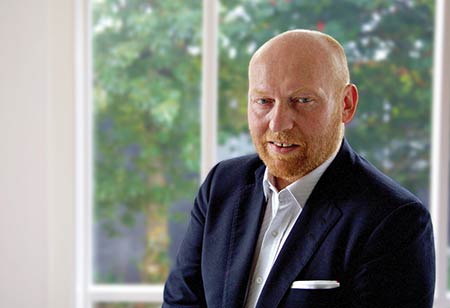
Tryggvi Þór Herbertsson, global head of hydrogen strategy, serves as the chairman of QAIR Group. His vision is to commence projects with expertise in various fields, building partnerships in the industry across countries.
In an interview with Electrical Business Review Europe Herbertsson shared his insights on his professional journey in the renewable resource space and the new developments and challenges within the hydrochemical industry.
A Wide Range of Professional Expertise
My professional journey started as an economics professor. The experience landed me a position as a CEO in an investment bank in Iceland until the financial crisis. I then decided to change my profession and worked as a special economic advisor for the government of Iceland, overseeing the banking challenges. After gaining experience, I worked as an MP and stayed in the position for four years.
Years of expertise enabled me to assume chairman responsibilities for multiple companies and reach different heights in my professional journey. In my current role, I serve as the chairman and head of the strategy and partnership department at QAIR Iceland, providing solutions to produce and manage renewable energy.
Expanding the Roots Globally
We are positioned as an independent power producer, using wind as a source of energy to generate power at around 1.4 GHz. Our recent project consists of generating 35 GHz of power. The power plants are currently operating in 20 countries, including Brazil, Poland and France. We have been working on different strategies for the production of green electronics. This project will be operated in countries like France, Iceland and Brazil, making it a massive milestone.
Developing and building traditional renewables can be complex, my advice would be to develop a deeper understanding of the industry and initiate with a well-organized plan to reduce production errors and generate green energy efficiently.
Our first large hydrogen project is taking place in France. This achievement will transition us into operating different hydrogen refueling stations in Iceland, including the first commercial hydrogen refueling station in the world.
We focus on developing construction and operational based power plants and hydrogen products through our strategic projects around the world.
Mitigating Challenges Around Renewable Resources
The industry is going through many developments and planning without accounting for project execution makes it difficult to keep up with the proliferating technologies. We have found solid oxide electrolysis (SOEC) which is a promising alternative to this technological challenge. SOEC is an efficient way to produce ammonia using hydrogen for ammonia plants. The electrolysis process can increase competency by 30 to 40 percent and reduce the cost of hydrogen, making it an efficient energy source.
We focus on working with renewable energy requirements and staying ahead in the industry by being opportunistic about generating green electrons. The process will allow us to work on energy transfusion projects with reduced costs and use them further for the benefit of our shareholders.
Leading the Hydroelectric Area
My first project was to develop power and wind plants here in Iceland and today, we are developing over one GW of wind power. We are the largest shareholder of arctic hydro where we produce hydroelectricity in small power plants.
My current focus is on the wind-to-hydrogen project, which is a renewable way of generating 840 megavolts of power through ammonia. Our first project is in the steep phase of execution. We conducted an environmental impact assessment by analyzing all the physical and conceptual studies and securing the land for the commencement of the project, leaving the case for the final investment decision. The initiation phase of the final concept will commence shortly, and this project will be a great development for the industry.
The Key to Success in the Renewable Energy Space
Leaders from different backgrounds transitioning to the hydrogen sector go through multiple challenges. Developing and building traditional renewables can be complex, my advice would be to develop a deeper understanding of the industry and initiate with a well-organized plan to reduce production errors and generate green energy efficiently.