
Thank you for Subscribing to Energy Business Review Weekly Brief
Why does scale alone fail to deliver consistent results in complex well remediation operations? Pressure changes, fluid loading, sand accumulation and downhole obstructions are routine conditions in oilfield operations and often occur simultaneously. Managing them requires correctly interpreting the well and addressing each issue in the proper sequence. The common assumption that larger fleets and more crews deliver better outcomes does not always hold. In well remediation, results depend far more on judgment, continuity and precise execution than on scale alone. Michael Allumbaugh, owner and president of STX Slickline, has worked in that environment long enough to recognize the distinction of quality over quantity in practice. Decades of involvement in wellsite decisions, crew-level execution and problem-solving under pressure have shown him where scale begins to diverge from execution. Large service companies can deploy hundreds of field crews, extending their reach across the market. But as operations expand, decision-making often moves farther from wellsite execution. Customer interaction becomes less direct, context is transferred across more layers and the level of attention required to work through complex well conditions becomes harder to maintain. “I would rather run one quality crew and solve one problem at a time than address 15 different issues and not do as thorough a job,” says Allumbaugh. How does STX Slickline maintain execution quality through a focused operational model? That perspective defines how STX Slickline operates. Its approach centers on maintaining control at the well level, where accurate interpretation and disciplined execution determine the outcome. By limiting scale and keeping crews closely aligned with each job, STX ensures decisions are made with full context and carried through without fragmentation. It operates with five crews, each led by a supervisor and supported by one to two helpers, with every unit stocked with the right tools. That small scale does not limit the operation’s focus. It sharpens it. The crew arrives ready to assess the well, read the indicators, select the right tools and work through the problem, whether it’s remediation, troubleshooting or fishing. A tight structure also protects consistency across the customer base, giving smaller operators the same level of attention and field commitment as major producers. “When our crew shows up on location, the value is in being there that day,” says Allumbaugh. “We’re not looking at tomorrow. We’re not thinking about yesterday. The value is in that day, right there and putting forth the best effort.” From Callout to Diagnosis What role does real-time diagnosis play in resolving complex downhole conditions effectively? Operators call Allumbaugh directly or the supervisor they already know. A familiar line of contact keeps service personal and accountability clear. That direct access reduces handoffs, preserves context and immediately puts the problem in front of the people responsible for solving it. In a line of work where no two wells present the same way, continuity helps STX Slickline respond with greater clarity, speed and control. In the field, the work begins with diagnosis, identifying what has shifted from the well’s normal range. Though the client may describe the issue, conditions in wells extending 12,000 to 14,000 feet below the surface are difficult for them to assess. The team considers pressure behavior, fluid levels, sand accumulation and other indicators, applying decades of specialized slickline experience to interpret those signals in real time. The analysis helps the crew determine what needs to happen first. Fluid may need to be cleared before the crew can read the well. Sand and debris may need to be removed before the real obstruction can be identified. The team follows a clear sequence of problem-solving so one issue does not hide another, and the right corrective action can be taken to restore well performance. A lost tool may be the cause of any of these conditions, and in a position where it cannot easily be retrieved. Fishing is handled as layered remediation. As one of its most trusted niches, the focus is not simply on retrieval. The more important questions are why the tool failed, where it is stuck and what kind of movement will free it without creating a secondary problem below the surface. From there, the crew works out a plan and works through the mechanics of access, controlled manipulation and recovery in the right order. Each STX unit remains on standby, carrying the specialized tools and diagnostic equipment needed to respond as efficiently as possible.
Top Solar Farm Vegetation Management Service 2026
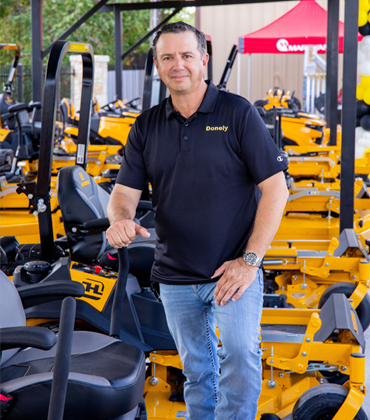
South Texas Curbing operates as a ground-level asset protector for utility-scale solar infrastructure, delivering integrated vegetation management through mechanical, ecological and agricultural controls. Utility-scale solar facilities represent multi-million-dollar infrastructure investments where unmanaged vegetation gradually reduces output and destabilizes operating conditions. Shade forms beneath panels, brush accumulates along fence lines and drainage channels narrow after heavy rain. These conditions compromise generation stability, increase fire exposure and complicate inspections. Over time, this weakens long-term return on investment. South Texas Curbing protects solar asset performance from the ground up by managing vegetation as an operational control rather than a routine maintenance task. Precision clearing, predictive planning and integrated grazing operate within a coordinated maintenance framework designed to reduce shading losses, stabilize land conditions and support infrastructure continuity. “We don’t just mow grass,” says Ely Valdez, Owner. “We protect megawatts.” Ground-Level Controls That Protect Output Utility-scale solar facilities operate within living ecosystems and require active control. South Texas Curbing tightly manages vegetation around inverters and transformers and reduces operational risk. Under-panel clearance is adjusted to match tilt system requirements. Drainage channels and access routes are stabilized to prevent degradation that can disrupt site performance. In drought-prone Southern regions, perimeter fire buffers help reduce seasonal exposure. .
Oilfield Chemical Manufacture

Oil and gas production is a complex, high-stakes endeavor. Operators are tasked with extracting hydrocarbons from beneath the earth’s surface, but what emerges isn’t always just oil and gas. Instead, it is often a mixture of water, acid gases, and various contaminants. These unwanted elements can damage equipment, reduce operational efficiency, and even halt production. Overcoming these challenges requires addressing technical issues such as controlling corrosion, managing scale, optimizing fluid separation, and ensuring water clarity. Only by tackling these obstacles can operators maximize output while minimizing costs. As a leading innovator in oilfield chemistry, Jacam Catalyst goes beyond merely supplying chemicals—it partners with clients to tackle production challenges head-on as a full-service provider. The company is the third-largest production chemical provider globally in terms of both revenue and workforce, ranks second in the U.S. market, and holds the largest market share in the Permian Basin, one of the world’s most active oilproducing regions. These achievements are a testament to the company’s operational strength and reliability. Central to its success is a best-in-class manufacturing facility, ensuring that Jacam Catalyst delivers high-quality products and solutions with precision and efficiency. “Our mission is to provide products and partnerships that help our customers take control of their assets and optimize profitability,” says Vern Disney, president of Jacam Catalyst. “We serve hundreds of customers across all major basins with 55 facilities treating 84,000 locations, reflecting the vast scale of our operations.” The Competitive Edge of In-House Manufacturing A major factor that sets Jacam Catalyst apart from its competitors is its state-of-the-art, in-house manufacturing facility. Unlike many of its competitors, who rely on thirdparty suppliers, the company produces most of its products internally. This approach ensures stringent quality control and allows for unmatched flexibility and responsiveness. Whether demand spikes or operating conditions change, the company’s team can adjust production schedules and modify formulations in real time to meet customer needs. In an industry often driven by rigid production timelines, Jacam Catalyst’s flexibility allows it to prioritize the customer experience. This agility is central to the company’s commitment to delivering rapid turnaround times and consistent product availability, even in unpredictable circumstances. The results speak for themselves. Jacam Catalyst has earned the highest customer loyalty ratings in the production chemical space for five consecutive years, as reflected in the annual Kimberlite Industry survey. This ongoing recognition underscores the trust customers place in Jacam Catalyst, built through years of delivering high-quality, reliable solutions that drive results. Tailored Solutions for Complex Challenges Oil and gas production is far from a one-size-fits-all process. Every reservoir, operating condition, and contaminant requires a customized approach. Jacam Catalyst offers an extensive portfolio of over 800 products, each designed to address specific challenges across production environments. These products include corrosion inhibitors, scale inhibitors, emulsion breakers, paraffin inhibitors, and asphaltene inhibitors.
CXO INSIGHTS

Championing Strategic Leadership in Water and Forest Sustainability
Elvy Barton, Water and Forest Sustainability Senior Manager, Salt River Project
Driving Proactive Safety through Authentic Leadership
Britt Howard, Vice President, Worley

Energy Transition In The Natural Gas Industry
Terry Kreuz, Managing Director of Energy Transition, National Fuel Gas Company [NYSE: NFG]
Geospatial-First Utilities: Building the Baseline for Smarter Operations
Jon Leist, Program Director, Energy & Utilities, Woolpert Inc

Investment is the key to a clean energy future
Leslie Myers, Product Manager, Renewables, Puget Sound Energy


IN FOCUS
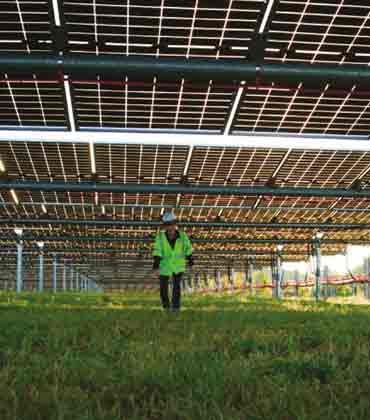
Powering Clean Energy: Solar Farm Vegetation Management Services
Solar farm vegetation management services protect energy output, reduce fire risk, and support sustainable land stewardship for expanding renewable infrastructure.

The Role of High-Pressure Fishing Solutions in Reviving Complex Oilfield Operations
High-pressure fishing solutions enable safe equipment recovery, improve efficiency, reduce downtime and extend the productive life of complex oilfields.
EDITORIAL
Driving Energy Forward Through Expertise and Execution
The energy sector continues to navigate a period of operational transformation as companies balance reliability, safety, efficiency and long-term sustainability. In this edition of Energy Business Review, we spotlight organizations and leaders that are strengthening energy infrastructure, advancing field operations and helping the industry respond to evolving market demands.
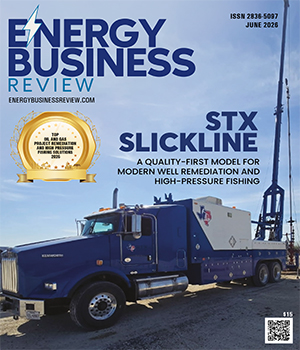
Our cover story, STX Slickline, recognized as the Top Oil and Gas Project Remediation and High Pressure Fishing Solutions 2026, highlights how experience and operational discipline continue to make a difference in the field. The company has earned the trust of its customers through a strong commitment to quality, reliable execution and a practical approach to solving complex well remediation, troubleshooting and high-pressure fishing challenges. By combining accurate diagnosis with experienced teams and close customer collaboration, STX Slickline has built long-standing relationships across the industry. Its steady growth reflects a focus on consistency, accountability and delivering results when they matter most.
Also featured in this edition is South Texas Curbing, recognized as the Top Solar Farm Vegetation Management Service 2026. The company works closely with solar operators to manage vegetation through routine maintenance, proactive planning and internally managed agrivoltaics grazing programs. Its approach helps reduce operational challenges, support consistent energy production and protect the long-term value of solar assets while promoting responsible land stewardship.
Industry leaders contribute to this problem issue as well. Mike Ritz, Operations Training Manager for Chesapeake Utilities Corp, emphasizes on-the-job training to maintain worker safety, while mentioning the changing demands from both new technology and the workforce. Britt Howard, Vice President for Worley, argues for real involvement by leadership in safety culture, emphasizing worker commitment and value-driven safety behavior over compliance.
The organizations and leaders featured in this edition show how expertise, accountability and strong execution continue to drive progress across the energy sector. We invite you to explore their stories, insights and achievements, and see how they are addressing today’s challenges while helping shape the future of energy.
